Live Casino in the UK: Games, Rules and Offers
 Available in GB
The guide explains how dealer streams and table controls work, then covers UK regulation, game choices, offer terms and budgeting.

Table of Contents
- How Live Casino Play Works Online
- What UK Regulation Means for Live Casino Players
- How to Compare Live Casino Sites Without Chasing a Ranking
- Live Dealers, Table Pace and Playing Etiquette
- Blackjack and Baccarat: Rules, Stakes and Decisions
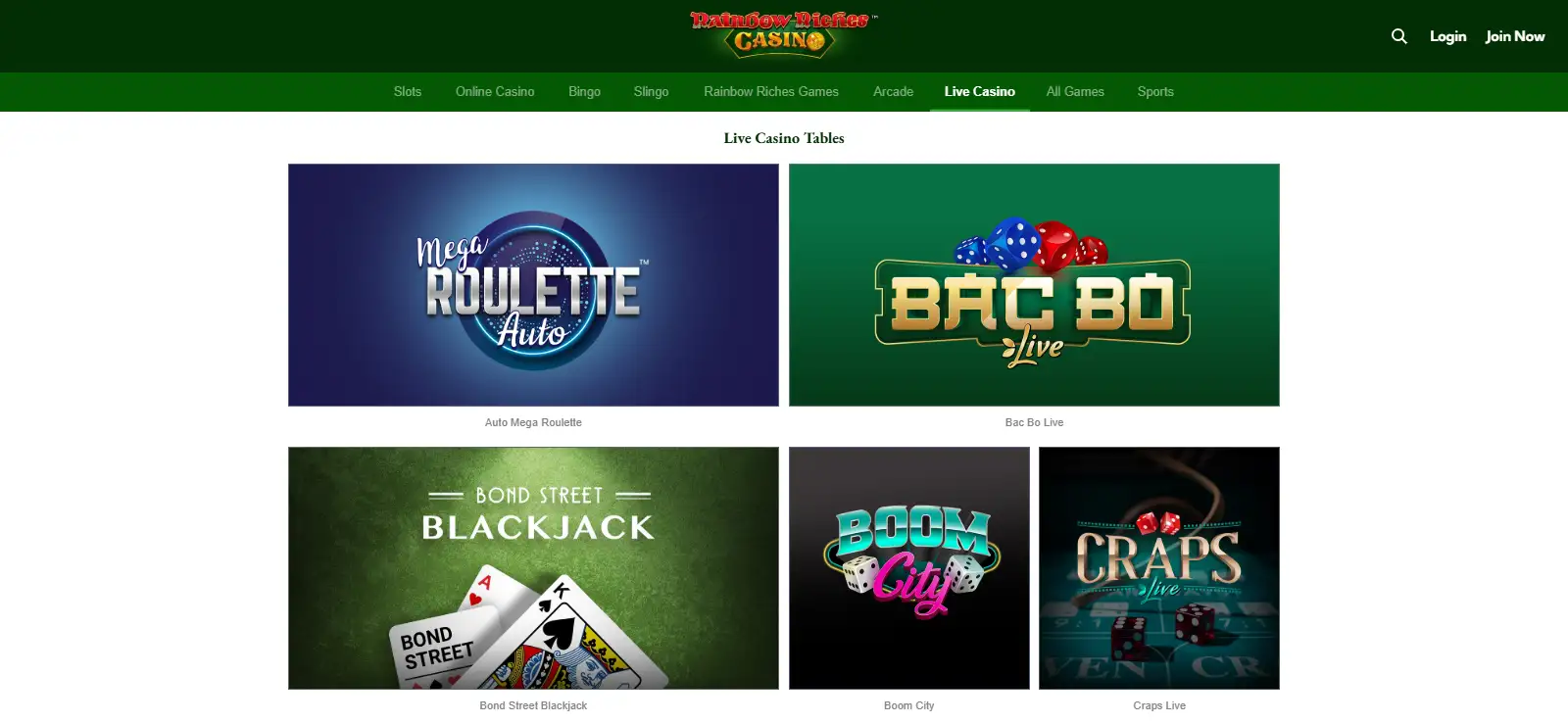
- Live Casino Games: What to Check in the Lobby
- Live Casino Bonuses: Read the Terms Before You Opt In
- No-Deposit Offers and the Cost of Claiming a Bonus
- Live Casino Offers: Check Eligibility Before You Sign Up
- Set a Budget Before You Play for Real Money
How Live Casino Play Works Online
A live casino table combines a video feed of a real dealer with an on-screen interface for taking part in the game. Rather than watching an animated sequence generated entirely by software, you see a dealer handling cards, a wheel or other equipment in a studio or casino setting. The stream and the controls sit together on your screen, so you can follow the table while using the available buttons and betting areas.
The exact layout varies by game and operator, but the basic arrangement is familiar: the video occupies one part of the screen, while the game interface shows the current round and the places where you can make selections. On a smaller screen, the stream and controls may be arranged differently or require scrolling. The key point is that the video shows what is happening at the table, while the interface is how you register your decisions.
From the stream to the table interface
When you open a live table, the stream shows the dealer and the physical or digital table setup. Depending on the game, the interface may display cards, outcomes, available betting areas, and prompts for the next action. These visual elements help connect what you see in the video with the game state shown on screen.
When choosing a UK live casino for 2026, payout timing is one practical detail to check alongside the live-game experience. Use these short verdicts as a reference when deciding what to explore.
Payout speed: 1-3 business days x3bet lists payouts as taking 1–3 business days. You can use that timing as one factor when considering it.
Payout speed: 1-3 business days Britsino lists a payout speed of 1–3 business days. You can factor this stated timeframe into your review.
Payout speed: 1-3 business days NightWin gives a payout timeframe of 1–3 business days. You have this practical detail to consider when exploring the operator.
Payout speed: 1-3 business days WinBeast lists payouts as taking 1–3 business days. You can keep that timeframe in mind as you assess it.
Payout speed: 1-3 business days Dieselwin states a payout speed of 1–3 business days. You can weigh this information as part of your choice.
Payout speed: 1-3 business days Chanze lists a payout timeframe of 1–3 business days. You can use this stated timing as a reference.
Payout speed: 1-3 business days SlotoSport gives a payout speed of 1–3 business days. You can consider this timing while looking into the operator.
Payout speed: 1-3 business days BeOnBet lists payouts as taking 1–3 business days. You can factor that timeframe into your decision.
Payout speed: 1-3 business days SpinFormula states a payout speed of 1–3 business days. You have this timing to consider when evaluating it.
Payout speed: 1-3 business days NightLuck lists a payout timeframe of 1–3 business days. You can keep this practical detail in mind as you explore it.
The dealer manages the table’s physical procedure: presenting cards, operating equipment and announcing what is happening. The software interface handles your interaction with the round. You select from the options displayed on screen, and the system records your input for the game. The dealer does not need to handle your individual controls; the video and interface work alongside each other.
Some tables also include chat or other on-screen features. Their presence and layout are not identical everywhere, so check what appears on the table you have opened rather than assuming every stream offers the same tools. If you are watching or streaming your screen, keep account details and other personal information out of view.
The experience is not simply a video player with a game pasted beside it. The stream gives you a view of the dealer-led action, while the interface gives you the means to follow and participate in the round. If either part is unclear, pause to inspect the table information or move to another table whose layout is easier to understand. A familiar game can still feel different when its controls are arranged differently.
Why the table is not always there
A live casino lobby is a changing display, not a permanent catalogue. Tables can appear or disappear, and a title shown in one session may not be visible when you return. Availability can depend on what is currently running and on how the lobby is organised. For that reason, treat the current lobby as the reliable place to check whether a particular live game is available.

The lobby may group tables by game, format or other filters. A search field can help when you already have a title in mind; categories are more useful when you want to see what is being offered without choosing a specific table first. If the result is empty, clear the filters and look again before concluding that the game is absent. A filter can narrow the display without making that obvious.
A game name alone may not tell you what kind of table you are opening. Look at the table’s description and interface before joining, especially if the lobby shows several versions of a familiar game. Some tables may use different presentation styles or layouts. The current listing is more useful than an old screenshot, a general description or an assumption based on another casino’s lobby.
Live games may also sit beside automated casino games in the same broader menu. The distinction is the dealer-led video stream: if there is no live feed, you are looking at a different format, even if the game name is similar. Conversely, a video-led table still relies on on-screen controls for your participation.
- Use the live lobby to check current availability
- Identify the stream and controls before playing
- Clear filters if the search result is empty
- Rely on saved links for table availability
- Assume every stream offers the same tools
- Rely on memory or old screenshots of the lobby
A practical way to get oriented
Before taking part, allow a moment to identify the stream, the table information and the controls. Confirm that the video is showing the table you intended to open, then check how the game displays its current state and where your available actions appear. This short orientation can prevent confusion when you move between tables with different interfaces.
If you return later, check the lobby again rather than relying on a saved link or a previous visit to establish availability. The same approach applies when browsing from a different device: the table may be listed, but its screen arrangement can change with the display. What matters is what the current lobby and table actually show.
The online format is straightforward once you separate its two parts: the dealer-led stream shows the action, and the interface carries your interaction with it. Start with the table that is available now, inspect its controls, and use the live lobby—not memory—to confirm what is on offer. No guesswork needed.
What UK Regulation Means for Live Casino Players
A live casino may look like a streamed table, but its online format does not put it beyond gambling regulation. In Great Britain, the UK Gambling Commission oversees commercial gambling, including remote casino services offered to consumers there. Its reach depends on the market an operator serves, not on where the cameras, servers or other key equipment are located. Moving the technical operation abroad does not remove the licensing requirement for a service offered to people in Great Britain.

The Commission is the sole regulator for commercial gambling in Great Britain. That gives its role a clear boundary: it is the relevant regulator for businesses offering gambling to the British market, rather than one of several bodies sharing responsibility for that commercial activity. The Gambling Act 2005 provides the wider statutory framework in England, Wales and Scotland; it does not apply in Northern Ireland.
Two kinds of licence
Licensing applies to both the business and relevant people involved in operating it. The Commission grants operating licences to businesses, while personal licences are issued to individuals working in roles that require them. These are different permissions, not interchangeable labels: an operator’s business authorisation and an individual’s personal authorisation concern distinct parts of the operation.
For you, the practical distinction is that a live casino’s regulated status cannot be judged from its stream or table interface alone. The service is still gambling offered remotely, and the operator must hold the appropriate Gambling Commission authorisation to serve consumers in Great Britain. A studio in another country does not create an exception. Nor does describing a product as entertainment alter the licensing position if it is a gambling service.
This is the framework behind the term “UK-licensed” in discussions of online casinos. For Great Britain, a legal online casino serving local players must have a current operating licence from the Commission. The licensing requirement applies to the business offering the gambling service; the personal-licence system concerns individuals operating within the sector. Both matter to how commercial gambling is regulated, though they answer different questions.
In Great Britain, the UK Gambling Commission is the sole regulator for commercial gambling, overseeing remote casino services regardless of where the servers or studios are located.
What the regulator’s reach does—and does not—mean
The Commission’s reach over remote gambling is tied to consumers in Great Britain, not to the physical location of the equipment that powers a game. That matters particularly for a streamed table: the dealer and studio may be elsewhere, while the gambling service is still being offered to a British customer. The remote nature of the product does not place it outside the British licensing system.
A licence establishes that the operator falls within the relevant regulatory framework; it is not a promise that every table, feature or experience will suit your preferences. Those are separate questions. Keep the distinction plain: regulation concerns permission to offer commercial gambling in the market, while a player’s choice of live tables concerns the service itself. A stream is not a licence.
How to Compare Live Casino Sites Without Chasing a Ranking
A ranking can show which live casino sites have been considered, but it cannot tell you which one suits your priorities. A useful comparison starts with the things you can verify: what the current lobby shows, how clearly table information is displayed, what an offer requires and what account checks may affect access to your money.
Start with the live lobby
Open the live section and inspect its current contents rather than relying on a homepage banner or an old review. Game availability can change, and a title mentioned elsewhere is not proof that it is available to you now. Look for a lobby that lets you identify formats and find tables without making you guess what is being offered.

Compare the information shown before you join: game name, table limits where provided, and any details explaining how the table works. If a key detail is missing, that is a practical weakness, not a reason to assume the terms are favourable. Your preferred choice depends on what you value: a broad visible selection, clear table details or a particular type of experience.
Check what the table tells you
A live dealer casino should make the relevant table information easy to find before you commit to a game. Check the limits shown for the individual table and whether its interface makes the available actions clear. Do not treat one table’s details as applying across the whole lobby; compare the specific table you intend to use.
The same principle applies when you compare live casino websites. A polished landing page is not a substitute for useful information inside the lobby. If you cannot establish what is available or understand the displayed table conditions, move on to a clearer option.
Read promotion terms before opting in
Promotions are a separate comparison, not a shortcut to choosing a site. Check the current promotions page and read the full terms, including wagering conditions and which games count towards them. Bonus terms, wagering requirements and game eligibility can change. A welcome bonus may offer reduced value if you prefer table or live games, because those games can contribute at restricted rates; focus only on slots with a 100% contribution rate when using a welcome bonus.
Welcome bonuses may offer reduced value for live casino players because table games often contribute to wagering requirements at restricted rates.
Check the terms of the specific offer before signing up. Eligibility and value may vary between UK accounts, so a promotion described elsewhere may not be available to you on the same terms. Opt in only when you understand the conditions.
Include account checks in your comparison
Before depositing, find out what identity and account information may be requested. Operators must verify a customer’s age before allowing deposits, and further checks may be needed during the account process. Verification is not just a formality: withdrawals can be restricted while KYC checks are underway. Read the operator’s explanation of its requirements and make sure you can provide the requested information.
A simple comparison table can keep the decision grounded: lobby clarity, table details, promotion conditions and account-check information. Give each category the weight that matches your priorities rather than treating every site as a universal winner. The best option is the one that performs better on your chosen criteria, not the one with the most confident label.
Live Dealers, Table Pace and Playing Etiquette
A live dealer table combines a streamed game with controls for your decisions. The dealer manages the physical cards or wheel, while the table interface shows the current action and lets you respond when prompted. You are watching a shared game, not directing the dealer; the available controls depend on the table and game format.
That shared pace is part of the experience. A dealer cannot pause a round indefinitely while each player considers their next move, so prompts come with a decision window. Keep your attention on the table, read the on-screen options before acting, and avoid leaving a decision until the final moment. If you need time to understand what a control means, review the table instructions before joining a round.
Timing varies between games and tables, so do not treat one timer as a universal rule. A specialist review reports that live blackjack tables commonly allow 15 seconds to place wagers and 12 seconds to choose hit or stand. Those figures are a reported example, not a promise about every table; check the timer displayed in the game you are using. A missed prompt can affect what happens next, so timely decisions matter.
Calm, clear interaction helps keep the table moving. Use the interface rather than expecting the dealer to interpret an unclear message, and make your selection once you know what you intend to do. Chat, where available, is for brief, relevant communication; it is not a way to change the rules or ask the dealer to hold a round. Other players are sharing the same pace. Courtesy is practical.
If you stream or share your screen with someone else, check what is visible before you begin. Account names, messages, balances, notifications or other personal details may appear outside the game window. Close unrelated pages and silence notifications if needed, and avoid showing login or payment information. A live table can be public-facing even when your account is not.
The same care applies to your own attention. Keep the game window visible when a decision is pending, and do not assume that a round will wait while you switch tasks. If you are distracted, step away between rounds rather than rushing a choice. The aim is not to act quickly for its own sake, but to respond within the table’s stated window and understand the selection you are making.

A live dealer casino is not one uniform setup. The dealer-led format may feel familiar, but layouts, controls, timers and chat options can differ. Read the instructions shown for the specific table instead of relying on habits from another version. If a prompt is unclear, pause before the next round and find the table guidance; guessing under a timer is a poor substitute for knowing what a button does.
Keep it simple.
Blackjack and Baccarat: Rules, Stakes and Decisions
Blackjack gives you a clear decision point each time you choose whether to take another card or stand. The aim is to finish closer to 21 than the dealer without going over. If your hand exceeds 21, you bust and lose your bet, so taking another card can improve a weak total but also end the hand immediately. The better choice depends on the cards in front of you and the table’s rules; there is no decision that is safe in every situation.
A tie, or push, has a different outcome: if your total matches the dealer’s, your stake is returned rather than won or lost. That distinction matters when you compare results. A hand can avoid a loss without producing a profit.
Insurance is a separate wager offered when the dealer’s second card is an Ace. It costs half your original stake. Treat it as an additional decision, not as a way to protect the whole hand: check what the table’s rules say about the bet and its settlement before accepting it. The option appears at a particular point in the round, so you may need to decide while the game is moving.

Check the table stakes first
Limits can shape which live blackjack table suits you more than the game name does. A specialist review cited a £5 minimum and a £5,000 maximum at live blackjack tables. Those figures are a report from that review, not a promise about every table. Read the limits shown for the specific table before joining; a minimum that is too high can make the game unsuitable, while a maximum may be irrelevant if you play smaller hands.
The criterion is practical: select a table whose displayed minimum fits the stake you intend to place, and whose rules and pace you can follow. The label “live blackjack” does not tell you the limits. Check the details.
When you compare a live blackjack table with a conventional online version, focus on the decisions and conditions, not the word “live”. You still need to understand when a hand can bust, what happens on a tie, and whether an optional wager is being offered. If the table rules or limits are unclear, pause before placing a bet.
Baccarat is another live table-game option, but it is not simply blackjack under a different name. Consider it when you want a different format, and use the table information to understand the choices available before you play. Do not assume its decisions, limits or presentation match blackjack; confirm them in the particular game.
Focuses on getting closer to 21 than the dealer without busting, with decision points like hitting or standing.
A different live table format with its own specific decisions, limits, and presentation styles.
An optional side wager in blackjack offered when the dealer shows an Ace, costing half the original stake.
Whether you choose blackjack or baccarat, the useful comparison is the one that matches your preferences: decision-making, displayed stakes and clarity of rules. Only wager money you can afford to lose. A familiar game can still be a poor fit when its limits or decisions do not suit you.
Live Casino Games: What to Check in the Lobby
A live casino lobby is a snapshot of what an operator is offering, not a promise that every familiar game will be there. Treat availability as a criterion to verify: open the current lobby, use its live-game filters and search for the title or format you want. A game mentioned in a review, or visible in an old screenshot, may not appear in the lobby you can access now.
Start with the format
Classic table games are the clearest place to begin if you want recognisable casino tables. Blackjack and baccarat are common examples of live casino table games, but the range of versions, table limits and schedules can differ. Check the individual table’s information before opening it; a game name alone does not tell you whether that particular table suits your preferences.
Roulette tables give you another familiar format, with the live presentation and available options shown in the game listing. Compare the table details rather than assuming that every roulette version has the same settings.
Game-show-style titles use a host-led presentation and may combine casino-style choices with a more theatrical format. They are not a substitute for a classic table game, so decide whether you want the show format or a straightforward table before browsing.

These categories help narrow the choice without turning a lobby into a catalogue. If the format matters more to you than the title, filter by game type first, then inspect the options that remain.
Check what is actually available
Use the lobby’s search and category controls, then open the game information panel for details such as table limits and any stated availability. If a title does not appear, do not assume it is temporarily hidden or will be added later; check what the current lobby presents. Availability can vary, and a provider’s wider catalogue does not establish that a particular casino offers every game in it.
Some lobbies also distinguish real-money tables from free-play or demo options. Check the label before launching a game, since free access is not guaranteed for every title or account. A demo can let you explore the interface, but it does not establish the table’s real-money limits or conditions.
When comparing options, make a short note of the format, the table details and whether the game is currently accessible to you. That gives you a more useful basis for choosing than a long list of names. For instance, Madison Avenue Blackjack is a title you can search for, but its presence should still be confirmed in the current lobby.
The right choice depends on your criterion: a familiar table, a host-led show or a particular title. Check the live listing at the time you plan to play. Availability is the first filter.
Common Live Casino Formats
Classic table games include recognisable options like blackjack and baccarat with varying limits.
Roulette tables provide live presentation of the wheel with specific table settings.
Game-show-style titles feature host-led, theatrical presentations rather than straightforward table setups.
Live Casino Bonuses: Read the Terms Before You Opt In
A live casino bonus can look more valuable than it is if you focus on the headline amount and ignore the wagering requirement. That requirement sets how much eligible betting must be completed before bonus funds, or winnings linked to them, can be withdrawn. The calculation is straightforward; the game restrictions are where the small print earns its reputation.
A worked example cited in a specialist review pairs a £100 bonus with a 35x wagering requirement. On that basis, you would need to place £3,500 in qualifying bets before cashing out. That figure explains the arithmetic for this particular example; it is not a standard term to expect from every UK offer. Check whether the requirement applies to the bonus alone or to another amount stated in the terms.
Game contribution changes the calculation in practice. A live blackjack or roulette bet may count towards wagering at a restricted rate, or may be excluded. If a game contributes only part of each stake, you need more total betting on it to meet the requirement. A generous-looking live casino bonus can therefore be a poor fit if you mainly want to play table games.
When using a welcome bonus, focus on slots only where the contribution rate is 100%. Check the eligible-games list and the contribution table before opting in; a game’s presence in the lobby does not establish how it counts towards wagering. If the terms do not clearly show the rate for a game, do not assume its stakes qualify in full.
Bonus terms, wagering requirements and game eligibility can change. They can also differ between UK accounts, so a promotion described elsewhere may not match the offer shown to you. Check the current offer and its full terms for your account, including any conditions on eligible games and withdrawals. A bonus code does not replace that check.

The best live casino bonus is not necessarily the one with the largest headline amount. Compare offers by the amount you must wager on games you actually intend to play, and by which games count towards that total. If live tables contribute at restricted rates, a bonus may add little value to your preferred play. Read every condition before opting in.
No-Deposit Offers and the Cost of Claiming a Bonus
A no-deposit offer sounds simple: receive a reward without first adding your own funds. In practice, the label does not tell you what you can play, whether winnings can be withdrawn, or what conditions apply. A live casino promotion may advertise free play or spins, but that does not mean it gives you unrestricted access to live dealer tables.
Check what the reward actually covers. If it is free spins, read which games qualify and what happens to any winnings. A specialist review reports that free-spins winnings may be capped or subject to wagering requirements; those conditions determine whether a displayed win can become withdrawable money. The cap, eligible games and wagering rules are specific to the offer, not a general feature of every promotion.
Deposit-linked welcome offers work differently. You may be offered a reward after making a qualifying deposit, or through stages that require further deposits. A specialist review places minimum deposits for welcome-offer stages in the £10–£20 range. Treat that as a reported range, not a promise that every offer uses those amounts: the promotion’s own terms set the actual threshold.
The cost of claiming is not only the deposit. You may need to opt in, enter a code, use the reward within a stated period, or meet conditions before withdrawing. Codes can also be limited to eligible accounts or particular games. A “no deposit” label does not remove those conditions.
Before accepting any live casino bonus, open the full terms and check the reward type, eligible games, wagering rules, withdrawal restrictions and any cap on winnings. Bonus terms, wagering requirements and game eligibility can change. Do not assume a no-deposit reward applies to live games just because the casino offers a live lobby; confirm the promotion’s eligible games and current terms.

Compare the offer by what you can claim and what you must do to keep or withdraw the reward. If the conditions are unclear, leaving it unclaimed is a valid choice. Read first. Claim second.
Live Casino Offers: Check Eligibility Before You Sign Up
A live casino offer is only useful if you can claim it and the games you want count towards its terms. Treat sign-up offers and promotion codes as account-specific deals, not as standard perks attached to every UK account. Eligibility, offer structure and game contribution rules can change, so check the casino’s current promotions page before signing up.
Read the full terms before opting in. Confirm whether the offer is available to new customers, whether you need to enter a code, and whether opting in must happen before you deposit or start playing. Check the wagering conditions and any restrictions on eligible games. A code that looks relevant is not proof that it has been applied to your account.
Check whether live games qualify
If you want a live casino offer for table play, look for the contribution rules for live games specifically. Table and live casino games may contribute at restricted rates, which can make a welcome bonus less valuable if you mainly play them. When using a welcome bonus, focus only on slots with a 100% contribution rate; check the terms to confirm which games meet that condition.
The same check applies if you are looking for live poker. Do not assume that poker tables, live poker games or other casino games qualify just because they appear in the casino’s wider offer description. The terms should identify eligible games and explain how their play counts.
“Best” depends on the criterion. An offer may suit you if its eligible games match your preferences and its conditions are clear; a larger headline offer is not automatically a better fit. Compare the rules that affect your own account, rather than relying on a promotion summary or an old code shared elsewhere.
Only wager money you can afford to lose. Never use credit cards or borrow money to fund your gambling, as this is prohibited by UK regulations.
Before you opt in, confirm the current offer on the promotions page and read all wagering and eligibility conditions. Terms, wagering requirements and game eligibility are subject to change, and the value may differ between UK accounts. Check first; claim second.
Set a Budget Before You Play for Real Money
Browsing a live casino lobby and wagering at a table are different activities. You can look at game options, watch a stream and learn how the interface works without staking money. Once you place a real-money bet, the balance can fall quickly, and the live format does not make a wager safer or more predictable.
Before you join a table, decide what amount you can afford to lose without affecting bills, food, rent, debt payments or other essentials. Treat that figure as a limit, not a target to spend. If losing the full amount would create a problem, it is too much for gambling. Keep entertainment money separate from household finances where possible, and do not borrow to fund play.
A budget works best when it is set before you open a real-money game. Choose a stopping point for the session as well as a spending limit. When either is reached, leave the table. Do not raise the limit because a game has been running for a while or because you feel a win is due. A live dealer, a run of outcomes or an almost-win does not change what you can afford.
Keep losses within the limit
Chasing losses means continuing or increasing stakes to try to recover money already lost. It can turn a planned entertainment expense into a larger one, particularly when decisions happen quickly. If you notice yourself thinking that another hand or spin has to make things right, pause and step away rather than adding funds.

The same rule applies after a win. A better balance is not a reason to abandon your plan or treat winnings as money that cannot be lost. Set the limit in advance and stop when you reach it, whether the session has gone well or badly. If you find it difficult to stick to that boundary, take a break from real-money play and use available account controls or seek support.
For live casino games online, the table’s pace can make a small decision feel immediate. Decide your budget while you are away from the action, not after a loss or during a hand. Avoid keeping a payment method ready as a way to top up impulsively. In Britain, gambling regulations prohibit using credit cards for gambling; a credit facility should not be treated as a backup source of gambling money.
Separate play from everyday spending
Use only money that remains after essential costs and planned commitments are covered. Do not gamble with money set aside for bills, savings goals or someone else’s needs. If your income or circumstances change, reassess whether real-money play fits your budget at all. There is no obligation to play simply because you have opened an account or watched a table.
It can help to keep a brief record of deposits and spending, so the total does not disappear into a series of separate sessions. Check the balance against the limit you chose. If the amount is higher than expected, stop and reconsider before playing again. Do not rely on a winning session to repair a budget that has already been stretched.
Browsing a live dealer casino is not the same as placing bets, but moving from one to the other should be a deliberate choice. Before you join, know the amount you are prepared to lose and the point at which you will stop. Keep that boundary even when the table feels engaging or a result seems close. A budget is useful only when it holds.
Published by the Rainbow Riches Casino 1 team.