UK Casino Sites and Credit Card Gambling Rules
 Available in GB
The guide explains the UK restriction, payment-route limits and practical checks for deposits, withdrawals and alternatives.

Table of Contents
- Are Credit Cards Allowed for Gambling in the UK?
- Can You Use a Credit Card at a UK Online Casino?
- Which Online Casinos Accept Credit Card Deposits in the UK?
- Choosing a Deposit Method by What Matters to You
- Deposits, Withdrawals and Getting Your Money Back
- The Credit Card Gambling Ban and Payment Routes
- Payment Methods, Compatibility and Currency Checks
- Non-GamStop Casinos Do Not Override the Card Ban
- Keeping Casino Payments Consistent and Protected
- Playing Online Slots Without a Credit Card
Are Credit Cards Allowed for Gambling in the UK?
No. Credit-card payments for gambling have been prohibited in the UK since 14 April 2020, when the regulator introduced the ban. The rule remains in force; it has not been relaxed.
This is a restriction on gambling payments, not simply a decision made by an individual casino when designing its cashier. A remote gambling licensee serving customers in Great Britain cannot accept a credit-card payment for gambling. Changing the operator, the game or the layout of a payment page does not alter that underlying rule.
That distinction matters because a payment option can be absent for different reasons. A casino may not offer a particular method, or a method may be unavailable for an account or transaction. The credit-card restriction is different: it applies to the payment being used for gambling across the regulated market. It is not a temporary cashier setting that a customer can resolve by finding another UK-licensed casino.
The date is also useful when assessing old information. Pages or discussions that describe credit-card gambling as an available option may pre-date the ban or may not reflect the current UK position. For a UK customer, the relevant question is not whether a casino once listed a card brand, but whether the payment is a credit-card payment being used for gambling. Since the ban took effect, that category of payment has not been permitted at UK-licensed remote gambling operators.
When you’re considering a UK casino site that accepts credit cards, payment details are worth checking alongside the available banking methods. Use this list as a reference, and confirm directly whether credit-card deposits are currently supported.
Payout speed: 1-3 business days You can expect payouts to take 1–3 business days.
Payout speed: 1-3 business days Payouts are listed as taking 1–3 business days, giving you a clear timeframe to consider.
Payout speed: 1-3 business days You’re looking at a stated payout speed of 1–3 business days.
Payout speed: 1-3 business days The listed payout speed is 1–3 business days, which may help you assess whether the timing suits you.
Payout speed: 1-3 business days You can factor in a stated payout timeframe of 1–3 business days.
Payout speed: 1-3 business days Payouts are listed at 1–3 business days, a useful detail to check when considering payment arrangements.
Payout speed: 1-3 business days The available information gives a payout speed of 1–3 business days.
Payout speed: 1-3 business days You can expect the stated payout timeframe to be 1–3 business days.
Payout speed: 1-3 business days A payout speed of 1–3 business days is the key payment detail provided.
Payout speed: 1-3 business days You’re given a stated payout timeframe of 1–3 business days.
The rule sits within a wider system in which remote gambling licensees selling into the British market must hold the relevant Gambling Commission licence. The Gambling Act 2005 governs gambling in England, Wales and Scotland; Northern Ireland has a separate legal framework. For the British market, the credit-card restriction is part of the conditions under which licensed remote gambling is offered, rather than an optional policy that each operator can set for itself.
There is a practical consequence: a casino’s payment page cannot make a prohibited gambling payment permissible merely by displaying a familiar card logo or providing a route to enter card details. The legal test concerns the nature of the payment, not how prominently a method appears on screen. That is the key distinction.
So, are credit cards allowed for gambling in the UK? No. The ban began on 14 April 2020 and continues to apply to gambling payments at UK-licensed remote operators. The exact options shown in a cashier are a separate matter; they do not change the rule.
Can You Use a Credit Card at a UK Online Casino?
No. A UK-licensed online casino cannot accept a credit card for a gambling deposit. If you are asking whether you can use a credit card to gamble online in the UK, the practical answer is no at a licensed casino. The same applies to slot deposits: a credit card is not an eligible way to fund play.
A debit card is different. It draws on money in your bank account rather than borrowing against a credit facility, and UK casinos commonly accept debit cards, including Visa and Mastercard. So a casino may accept a Visa payment while refusing a Visa credit card. The logo identifies the card network; it does not, by itself, tell you whether that particular card product can be used.
| Card type | What it means for a casino deposit |
|---|---|
| Credit card | Not accepted for gambling at a UK-licensed casino |
| Debit card | Commonly accepted, subject to the operator’s cashier and your card’s eligibility |
The distinction matters when a cashier displays familiar card names. A Visa or Mastercard symbol is not a blanket promise that every card carrying that brand will work. The card’s type matters, and the payment options shown for your account are the practical check. A specialist review may list Visa and Mastercard among an operator’s payment methods, but that does not confirm that a credit-card product is eligible for gambling deposits in the UK. Check the casino’s own cashier before relying on a card listing.
If a credit card is declined, trying again at another UK-licensed casino is not a workaround. The restriction concerns credit-card payments for gambling, not a single operator’s preference or a temporary cashier setting. Switching from one credit card brand to another does not change the card’s underlying credit function.
For a deposit, check the card details rather than judging by its appearance. A card can carry the Visa or Mastercard name whether it is credit or debit. If you are unsure which kind you hold, check with the card issuer or consult the account information attached to it. Do not assume that a card accepted for ordinary online shopping will also be eligible for a casino deposit.
- Use a debit card for deposits
- Check the specific options in the casino cashier
- Verify the card type with your issuer if unsure
- Use a credit card for gambling deposits
- Rely on card logos alone to determine eligibility
- Assume a card used for shopping works for casinos
The cashier is still worth checking because available payment options can vary by account and can change. Look for a debit-card option, confirm that your own card is supported, and follow the payment instructions displayed there. A general payment-method page or a logo elsewhere on the site is less specific than the options available when you sign in to make a deposit.
This also answers the question of whether you can play slots with a credit card in the UK: not by depositing that way at a UK-licensed casino. The game does not alter the payment rule. If you want to fund an account by card, the relevant distinction is debit rather than credit, and acceptance should be confirmed in the cashier before you proceed.
In short, a credit card is not a permitted deposit choice at a UK-licensed online casino; a debit card may be. Check the card type and the cashier, not just the logo. A small distinction with a firm result.
Which Online Casinos Accept Credit Card Deposits in the UK?
No UK-licensed casino can be identified as accepting credit-card deposits for gambling. A page may advertise Visa or Mastercard, but that does not establish that a credit card is an eligible way to fund a UK gambling account. The payment logo names a card network, not the type of card or the transaction the cashier will permit.

That distinction matters when comparing claims about UK casinos that accept credit cards. A site’s payment page may show a card brand because it supports debit cards, because the information covers several countries, or because the page has not been updated to reflect current UK availability. None of those possibilities confirms that a UK customer can deposit with a credit card.
What a card logo does—and does not—tell you
Visa and Mastercard appear on payment-method lists, but the logo alone cannot tell you whether the cashier accepts a debit card, a credit card, or both. Nor does a general statement that “cards are accepted” settle the matter. You need to check the payment options presented for your own UK account and the card product you intend to use.
A specialist review may list Visa and Mastercard among a casino’s payment methods. Treat that as a pointer to what to verify, rather than proof that credit-card gambling deposits are available in the UK. Payment pages can be broad or outdated, while the cashier’s available options are tied to the account and market.
The practical test is not whether a casino mentions cards somewhere on its website. It is whether its UK cashier explicitly offers a permitted card payment for your account. If the information is unclear, ask the operator to confirm the eligible card type before attempting a deposit. Do not infer eligibility from a familiar logo.
Attention: Card brand logos (Visa, Mastercard) identify the network, not the card type; they do not guarantee that a credit card is accepted for UK gambling deposits.
How to read claims about accepting sites
Some pages use broad wording such as “card deposits” or “cards accepted” without explaining whether they mean debit cards or credit cards. Others may describe payment options in a way that applies across different jurisdictions. Read the wording narrowly: unless a claim specifically identifies a credit card as accepted for UK gambling deposits, it does not answer the question.
The date of a page also matters. The regulator introduced the credit-card gambling ban on 14 April 2020, and the rule has not been relaxed. A page that appears to list credit cards may be referring to an older arrangement or may simply fail to distinguish between card types. That is not evidence of a current UK option.
If a cashier shows Visa or Mastercard, check the card type stated in its instructions and the terms applying to UK customers. If it does not say that credit cards are accepted, do not treat the logo as permission to try one. A payment being technically visible in a list is not the same as being an available, eligible deposit method.
For a reader looking for online casinos that accept credit cards in the UK, the realistic finding is therefore limited: card-brand listings do not verify a UK-licensed casino accepting credit-card gambling deposits. The same applies to searches for an online casino or slots that take credit cards. A slot does not determine which payment method a casino can accept; that is a question for the operator’s UK cashier.
The useful comparison is between what a page claims and what the account-specific cashier actually offers. If the claim only says “Visa” or “Mastercard”, it has not established credit-card eligibility. Logos are not answers.

Choosing a Deposit Method by What Matters to You
A credit-card deposit is not a usable option at a UK-licensed casino, so the practical choice is between permitted methods the cashier actually offers. The best fit depends on what you value: paying directly from your bank, using a digital wallet, or choosing a method that is explicitly deposit-only. There is no single winner across all three criteria.
For a familiar card payment
Debit cards are commonly accepted by UK casinos, including Visa and Mastercard. If you want to pay from your bank account using a card you already use, this may be the simplest option to assess. Check that the card is a debit card: the logo alone does not identify the product, and a credit card cannot be used for gambling deposits at a UK-licensed operator.
A card can suit you if you prioritise a straightforward checkout and do not need a separate wallet account. It may be a poorer fit if you are trying to keep gambling transactions apart from other card spending. Your bank’s own controls and the casino cashier determine whether a particular transaction is available; the payment brand by itself is not a guarantee.
For speed or fewer checkout steps
PayPal is often described in specialist casino reviews as convenient and quick to use. The same kind of review may note that a casino’s promotion terms exclude PayPal deposits. Treat that as a point to check for the specific offer, not as a rule that applies to every operator. If a bonus matters to you, read its payment-method conditions before depositing.
Simple bank-account payments; commonly accepted by UK casinos.
Often cited as convenient and quick, though may be excluded from some bonuses.
Bank-authorised transfers that can provide instant deposits and fast withdrawals.
Open banking and bank transfers may also suit you if you prefer to approve a payment through your bank rather than enter card details. Specialist casino reviews describe these methods as capable of providing instant deposits and fast withdrawals at many sites, but availability and timing depend on the casino and payment route. For choosing a deposit method, the immediate question is whether the method appears in the cashier and works with your bank.
Convenience is not the same as promotion eligibility. A quick payment can still be excluded from an offer, so compare the cashier options with the bonus terms before you select one.
For wallet users and deposit-only payments
Skrill and Neteller are offered at some casinos. Specialist casino reviews also flag that these e-wallets may be excluded from promotions. If you already use one, check both whether it is available at your chosen casino and whether paying with it affects the offer you intend to claim. Do not assume that a method listed in the cashier qualifies for every promotion.
Paysafecard has a different purpose: it is a prepaid voucher for deposits only. That makes it unsuitable if you want one method to cover both sides of your casino account activity. Choose it only after confirming that a deposit-only method meets your needs and that the operator’s terms explain how any later payout is handled.
Compare the criteria, not a headline ranking
A useful comparison is short: card familiarity points towards a debit card; bank-authorised payment may point towards open banking or a transfer; wallet convenience may favour PayPal, Skrill or Neteller; and a prepaid deposit points towards Paysafecard. Promotion eligibility can change the result, especially where an offer excludes a payment type.
Before choosing, compare the methods shown in the cashier against the terms that matter to you. The right method is the one that fits your priorities and the casino’s conditions—not the one with the most confident label.

Deposits, Withdrawals and Getting Your Money Back
A deposit and a withdrawal are separate transactions, with different checks and processing stages. Money may appear in your casino balance quickly, but that does not mean a later payout will arrive at the same speed. A specialist payment review notes that a card deposit can be instant while a withdrawal takes several business days. The cashier’s displayed estimate is therefore more useful for planning than the speed of your first payment.
What happens after you request a withdrawal
A payout request is not necessarily sent straight to your bank or payment account. The casino may first review the request internally, check the account and confirm that the withdrawal can be processed under its procedures. The time taken depends partly on that approval process and whether your account is fully verified.
KYC can add a step, particularly when you request your first withdrawal. The casino may need to complete checks before releasing funds, so an account that has not yet been verified can face a longer wait. If documents or information are requested, follow the casino’s instructions and make sure the details match your account. A pending withdrawal is not the same as a failed payment, but you should check the account status or contact support if the casino has not explained the delay.
Timing also depends on what happens after approval. The casino’s processing stage and the payment provider’s delivery stage are distinct: an approved payout may still need time to reach the destination. That is why a rapid deposit is a poor predictor of when you will receive withdrawn funds. A useful comparison is the full route from request to arrival, not simply the time needed to fund your balance.
Rapid deposits are a poor predictor of withdrawal speed, as payouts must undergo internal casino review and account verification.
Why payouts may return to the original source
UK anti-money laundering rules generally mean that a payout should go back to the payment source used to fund the account. This is often called a closed-loop approach. It helps connect the incoming and outgoing transactions and is one reason a casino may not let you choose an entirely different destination at withdrawal.
If the original payment route cannot receive the payout, the casino may need to arrange another route and carry out additional checks. Do not assume that an alternative can be added instantly or that every method used for a deposit can also receive withdrawals. The casino’s payment terms and cashier should explain the available process for your account.
For the same reason, keep a record of the deposit method and check the withdrawal instructions before relying on a particular route. If the cashier lists a method for deposits, that alone does not establish that it supports payouts. The relevant detail is whether it is available for both sides of the transaction on your account.
Comparing payout expectations
A specialist payment review identifies PayPal, open banking services and debit cards connected to fast payout systems among the quicker withdrawal options. That is a guide to possible routes, not a promise about a particular casino: internal approval, account verification and the provider still affect the result.
| Stage | What can affect it |
|---|---|
| Casino review | Internal approval and account checks |
| Verification | Whether KYC is complete |
| Payment delivery | The chosen route and provider processing |
Before making a deposit, look for the casino’s stated withdrawal procedure and the method it will use to return funds. For credit card casino alternatives in the UK, the important practical point is not just how quickly a deposit can be made; it is whether the permitted payment route also gives you a clear, workable way to receive a payout. Speed is only half the transaction.
The Credit Card Gambling Ban and Payment Routes
The UK’s credit-card gambling ban covers more than entering card details directly into a casino cashier. Its purpose is not defeated by inserting another payment service between the card issuer and the gambling account. A change of route does not change the source of the money.
The regulator brought the ban into effect on 14 April 2020, and it remains in force. Remote gambling licensees must not accept credit-card payments for gambling, including payments routed through a money service business. In practical terms, using a service to move credit-card funds before sending them to a gambling account does not make those funds acceptable for a deposit.
That matters because a transaction can appear on your bank statement under the name of an intermediary rather than a casino. The label alone does not establish that the payment complies with the rule. If the money service business is being used to route credit-card funds to gambling, the extra step does not turn the underlying credit-card payment into a permitted one.
E-wallets are not an automatic workaround
The same principle applies to e-wallets. A wallet payment is not automatically acceptable just because the casino cashier lists that wallet as an option. Operators cannot accept wallet payments where the wallet allows credit-card funds to be used for gambling.
Credit Card Ban
Using an e-wallet or intermediary to route credit-card funds into a gambling account is prohibited and does not make the payment permissible.
Check the wallet’s funding terms, not just the payment button. If you can add money to the wallet using a credit card and then use that balance for gambling, the route falls within the restriction. Moving the balance through a wallet does not erase how it was funded.
Wallet rules and cashier arrangements can vary, so a method’s presence on a payment page is not enough to establish that every funding route is allowed. Where the wallet separates or restricts funding sources, follow its own instructions and the casino’s stated payment conditions. Do not assume that a payment will be accepted simply because the wallet itself is available.
What to check before attempting a payment
Look at the full chain: how the account is funded, whether an intermediary is involved, and whether the money is then being used for gambling. If a route depends on credit-card funds at any stage, it is not a safe way to get around the UK restriction. A declined transaction is preferable to trying variations that disguise the same source.
You should also distinguish the payment service’s general functions from the specific use permitted by the casino. A provider may support several ways to add funds, but that does not mean every funding source can be used for gambling. Read the relevant terms and ask the provider or casino for clarification if the funding route is unclear.
The ban is about credit-card payments for gambling, not merely the name displayed beside a deposit option. Intermediaries do not create an exception. The route matters.
Payment Methods, Compatibility and Currency Checks
A payment logo on a casino page is only a starting point. Before depositing, check the cashier while signed in: the methods shown can depend on the operator, your account and the transaction you are making. A method listed on a general payments page may not be available for your account, and a deposit option is not automatically a withdrawal option.
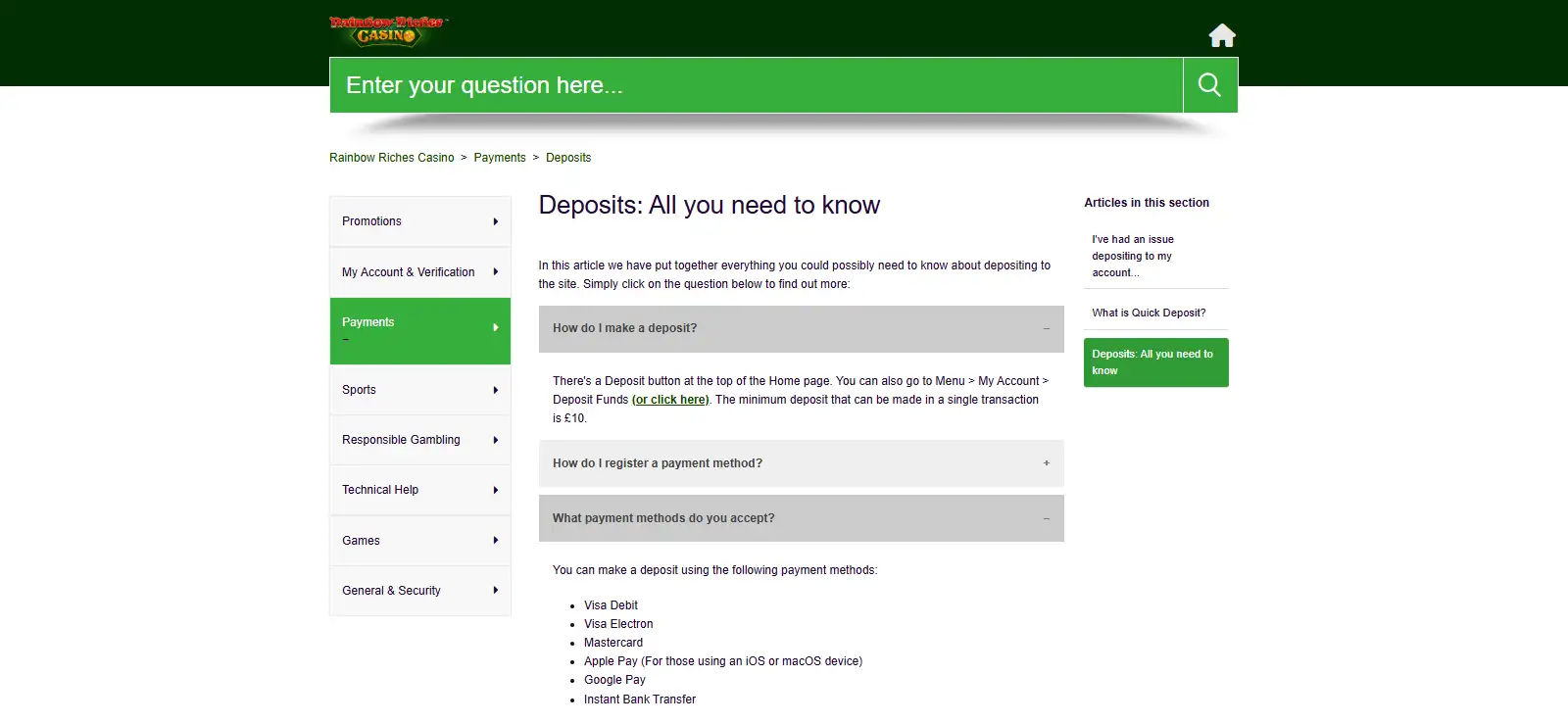
For each method you are considering, confirm whether it supports both deposits and withdrawals. If it is deposit-only, you will need to understand how a payout can be made before sending money. Read the cashier’s instructions and the payment terms together; either may explain restrictions that a logo cannot.
Check the method against your account
Availability is specific, not universal. Some UK Gambling Commission-licensed casinos take Apple Pay deposits. A specialist casino review describes Jeton as available at a handful of UK online casinos in 2026, while another specialist review calls Skrill one of the more common deposit choices at UK-facing casino sites. These descriptions are not a guarantee that either method will appear in your cashier. Check the live options rather than relying on a general list.
The same applies to cards. Visa or Mastercard branding does not establish that a particular card product is eligible, and a credit card cannot be used for gambling payments at a UK-licensed casino. A debit card is a different product; confirm that the cashier accepts yours before proceeding.
Check the payment provider’s name and the account details required, too. A method can be technically available but unsuitable if you cannot meet its conditions or complete the required verification. Operators must verify your age before allowing a deposit.
Verify Deposit Method
- Sign in to the casino cashier to see available options
- Confirm the card is a debit product, not credit
- Verify that the method supports both deposits and withdrawals
- Check that the account currency matches your intention
- Verify the casino’s licence on the Gambling Commission register
Confirm the currency before paying
A specialist review of casino payment pages reports GBP support, but that does not establish the currency set for every account. Confirm the account currency in your profile or cashier before your first transaction. If your account is held in another currency, conversion may affect the amount credited or debited.
Look at the currency displayed at each stage: when you choose a deposit amount, when the payment is authorised and when a withdrawal is requested. If the figures or currency labels do not match what you expect, stop and check with the operator or payment provider rather than confirming the transaction.
Finally, verify the casino’s licence number on the UK Gambling Commission’s public register before depositing. The useful test is not whether a method appears somewhere on the site; it is whether it is available to your account, supports the transaction you need and operates in the currency you intend to use. Logos are not compatibility checks.
Non-GamStop Casinos Do Not Override the Card Ban
GamStop and the credit-card restriction address different things. GamStop is a self-exclusion scheme; the card rule governs how remote gambling licensees may take payments. A casino’s absence from GamStop does not change the payment requirements that apply to a UK-licensed operator.
The regulator introduced the credit-card gambling ban on 14 April 2020, and it remains in force. So a UK-licensed casino cannot make credit-card deposits permissible by being outside GamStop. The operator’s status in a self-exclusion scheme is not an exception to payment rules.

There is a separate question about licensing. Remote gambling operators that serve customers in Great Britain need a UK Gambling Commission licence, even if the business is based elsewhere. A site operating outside that system does not become a UK-licensed casino because it accepts UK players or describes itself as “non-GamStop”. Online gambling in the UK is legal through licensed and regulated sites; an offshore operator’s different status is not a reason to treat its payment arrangements as equivalent.
That distinction matters when a site advertises credit-card deposits. The phrase may describe an offer aimed at customers in another country, a payment option that is unavailable to UK customers, or an operator outside UK regulation. It does not establish that a UK-licensed casino can accept credit-card payments for gambling. A familiar card logo is not enough to settle the issue.
GamStop status should also not be used as a shortcut for deciding whether a site is safe or suitable. If you have self-excluded, looking for an operator that is not part of the scheme can undermine the purpose of that decision. The payment restriction and self-exclusion are separate safeguards, but neither should be treated as a loophole around the other.
For a UK player, check the operator’s current UK Gambling Commission licence on the public register before depositing. Do not infer licensing from a site’s payment page, its location, or its claims about GamStop. If a site presents itself as available to UK customers while promoting credit-card gambling, pause and establish what licence it holds and which rules apply. A label is not a licence.
The practical distinction is plain: being outside GamStop does not make credit-card gambling acceptable at a UK-licensed casino, and it does not turn an offshore site into a regulated UK operator. Different issue.
Licensing vs GamStop
Being outside GamStop does not grant a casino permission to accept credit cards or make an offshore site a regulated UK operator.
Keeping Casino Payments Consistent and Protected
When you pay into a casino account, the details should point to you: your account information and the payment route should belong to the same customer. That consistency can reduce avoidable friction caused by mismatched ownership details. It is a basic check, but a useful one.
A practical approach is to use one payment account consistently for deposits and withdrawals, where the casino supports that route for both. The same named account creates a clearer transaction trail than switching between payment sources without a reason. It does not remove the casino’s checks, but it can help prevent basic questions about who owns the funds or the account.
Casinos also use closed-loop rules. Under this approach, funds are returned to the original payment source where possible. Returning money this way is a common anti-fraud and anti-money-laundering control: it helps connect the payout with the earlier deposit and limits opportunities for funds to pass through unrelated accounts.
If the original source cannot receive a payout, an alternative route may be available, but it can involve additional verification. Be prepared to confirm that the substitute account belongs to you. The payment option appearing in a cashier does not, by itself, mean it will be suitable for every part of a transaction.
A simple ownership check
Before making a deposit, check that the casino account and payment account use your own details. If an account is shared, held by someone else, or registered under different information, the ownership trail may be harder to establish. Keeping details consistent is the cleaner route.
If the casino asks for KYC documents or clarification, provide information that matches the account and payment method rather than trying another person’s route. Extra checks are a security measure, not a reason to bypass the operator’s process.
For anyone looking at credit card casino sites in the UK, payment security starts with the same principle: the name on the gambling account and the name attached to the payment route should align. That does not make a restricted payment type acceptable; ownership consistency is a separate safeguard. The useful test is not whether a payment appears in a list, but whether it belongs to you and can be followed through the transaction.

Keep it consistent.
Playing Online Slots Without a Credit Card
The payment restriction applies to online slots as well as other forms of gambling. A UK-licensed casino cannot take a credit-card payment for a slot deposit; choosing a slot game does not change the payment rules. The regulator’s ban took effect on 14 April 2020 and remains in force.
A debit card is a practical alternative where the casino’s cashier accepts it. UK casinos commonly accept Visa and Mastercard debit cards, but the logo alone does not tell you whether your particular card is eligible. Check that it is a debit card, then confirm the cashier offers it for your account before attempting a deposit. If the payment method is not available there, do not try to make a credit card work by treating it as a different kind of card.
Keep payment eligibility separate from the rules governing the game. A permitted deposit method does not alter how online slots may be played in Britain. Autoplay is banned, so you must start each spin yourself. Each spin must also last at least 2.5 seconds. These are requirements for slot play, not conditions attached to a particular card or deposit method.
Before funding your account, look at the cashier and the slot’s controls. Confirm that the payment option is accepted for deposits, and check that the game does not offer an autoplay setting. If a card is described simply as a “card”, check whether the cashier distinguishes debit from credit; the distinction matters. A card that can pay for ordinary purchases is not automatically permitted for gambling deposits.
The useful choice is therefore not between credit-card slot sites, but between payment methods the casino actually accepts for gambling. For a debit card, the test is straightforward: it must be a debit product, and the cashier must make it available. Then play within the slot rules. No workaround.
What is the fastest withdrawal method for UK casinos?
PayPal, open banking and debit cards linked to fast payout systems are generally among the quickest. Your account’s verification status and the casino’s approval time also affect how soon you receive the money.
Why must withdrawals return to the deposit method?
Returning funds to the original payment source is a common anti-fraud and anti-money-laundering control. Using a different route may mean extra verification.
What is the current minimum deposit?
Minimum deposits commonly start at £10–£20, depending on the payment method. Check the cashier for the minimum shown for your chosen method.
Which method has the lowest fees?
There is no universally lowest-fee method. Compare casino and provider charges, bank or issuer fees, currency-conversion spreads and any network costs for your transaction.
Is Skrill available?
Yes, Skrill remains a common option at UK-friendly casino sites, though availability can vary by site and it may be excluded from promotions.
Do UK casino withdrawals require verification?
Yes, verification may be needed, particularly for a first withdrawal. It can take longer to process a payout while your account is being verified.
Are fast casino withdrawals guaranteed?
No. Withdrawal speed depends on the casino’s approval process and whether your account is fully verified; bank transfers can also be affected by cut-off times and weekends.
Prepared by the Rainbow Riches Casino 1 editorial staff.