
Chicken Road Game in UK Casinos: Format and Checks
 Available in GB
A game’s name and category label do not establish its rules, while licensing, demos and bonus terms each require separate checks.

Table of Contents
- Is Chicken Road a Slot, a Crash Game, or Something Else?
- Playing Online: What the Format Does—and Doesn’t—Tell You
- Crash-Game and Rewards Claims: Separate the Label from the Terms
- The UK Casino Context in 2026: Licensing Comes First
- What a Chicken Road Demo Can—and Cannot—Confirm
- Free Play, Reviews and Bonus Terms: Check the Conditions
- Playing on a Phone and Paying In: Keep Format and Payments Separate
- Searching for Chicken Road 2: Don’t Assume the Sequel’s Features
- Chicken-Crossing Game Searches: What the Category Can Tell You
- Casinos with Chicken Road: UKGC and Offshore Are Not the Same
Is Chicken Road a Slot, a Crash Game, or Something Else?
“Chicken Road” may be described as a slot, a crash game or simply a casino game, but those labels are not interchangeable—and a name alone cannot settle which one applies. To classify a game, you need information about its rules and how its outcomes are determined. Without that, the most accurate answer is that the title’s category remains unclear.
A slot is a familiar casino category, while “crash game” is another label used for a type of gambling game. Those terms suggest different formats, but seeing either attached to Chicken Road does not confirm its mechanics. Nor does a reference to a chicken or a road in the title establish that players guide a character across a path, make choices at successive stages or trigger a particular ending. A name can hint at a theme; it is not a rulebook.
The distinction matters because a category label can shape your expectations. Someone looking for a slot may expect the conventions associated with that category, while someone seeking a crash game may expect a different kind of play. If the label is inaccurate, those expectations can lead you to misunderstand what you are being offered. The useful test is not how confidently a page uses the term, but whether it provides rules that support the classification.
When choosing where to play Chicken Road in the UK in 2026, payout timing is one practical detail to check. Use these verdicts as a quick reference to the withdrawal timeframe provided for each operator.
Payout speed: 1-3 business days You can expect payouts to take 1–3 business days.
Payout speed: 1-3 business days You can expect payouts to take 1–3 business days.
Payout speed: 1-3 business days You can expect payouts to take 1–3 business days.
Payout speed: 1-3 business days You can expect payouts to take 1–3 business days.
Payout speed: 1-3 business days You can expect payouts to take 1–3 business days.
Payout speed: 1-3 business days You can expect payouts to take 1–3 business days.
Payout speed: 1-3 business days You can expect payouts to take 1–3 business days.
Payout speed: 1-3 business days You can expect payouts to take 1–3 business days.
Payout speed: 1-3 business days You can expect payouts to take 1–3 business days.
Payout speed: 1-3 business days You can expect payouts to take 1–3 business days.
| Label | What the label suggests | What would establish the classification |
|---|---|---|
| Slot | A game presented as belonging to the slot category | Game rules or an official listing that identifies it as a slot |
| Crash game | A game presented as belonging to the crash category | Rules that explain the relevant game format and how outcomes work |
| Casino game | A broad gambling category | Confirmation that players wager on possible outcomes |
This is a way to organise the question, not evidence that Chicken Road fits any particular row. A promotional heading or a short description may repeat a category without explaining the rules behind it. More useful material would set out how a round works, what the player can do, how an outcome is decided and how any return is calculated. If those details are absent, the label remains an assertion rather than a demonstrated classification.
There is also a broader point about what “casino game” means. Casino games involve players staking cash or chips on possible random outcomes, or combinations of outcomes. That general definition can help distinguish gambling from entertainment that does not involve a wager. It does not, by itself, tell you whether a specific title is a slot, a crash game or another format. The label “casino game” is wider than either of the more specific labels.
The financial comparison deserves equal care. Casino games typically give the casino a predictable advantage over the long term, while still allowing players to make short-term gains. That is a general feature of casino gambling, not a calculation about Chicken Road. It does not predict what will happen in an individual round, and it does not establish a particular game’s rules, odds or return. Those details need to come from information specific to the game.
A sensible order of checks is therefore simple. First, look for a clear category supplied alongside the rules, rather than relying on a headline. Next, see whether the described play actually matches that category. Finally, treat the game’s theme and title as separate from its mechanics. If the available description does not explain enough to make those checks, the responsible conclusion is not to fill in the blanks yourself.
That may feel less satisfying than a definite label. It is more useful than a confident guess. Calling Chicken Road a slot or a crash game without supporting rules risks treating a marketing phrase as a verified description. Until the game’s classification is backed by clear information, “casino game” is the broadest description that can be discussed without assuming how it works.
Attention: Calling Chicken Road a slot or a crash game without supporting rules risks treating a marketing phrase as a verified description.
Playing Online: What the Format Does—and Doesn’t—Tell You
Casino games can be offered through online casinos where this is permitted by law. That describes a way of providing casino games, not a guarantee that every game can be found online or a description of how any particular title works. The distinction matters when you are trying to establish whether Chicken Road is available to play online: the words “online casino” around a game’s name do not, by themselves, answer that question.
Availability and format are separate checks. A game might be discussed in connection with online casinos, but that does not confirm that a particular operator currently carries it. Nor does the general fact that casino games are available online establish what Chicken Road’s screen looks like, how a session starts, or what controls appear. Those details would need to be confirmed for the specific game and venue, rather than inferred from the setting.
Online describes the venue, not the rules
An online casino is a digital venue for casino games. That broad description tells you where a game may be offered; it does not tell you whether the game is a slot, a crash game, or another format. It also does not establish how outcomes are generated, whether a round has stages, or what choices a player can make. Those are questions about mechanics, not about whether casino games can be provided online.
This is why “Chicken Road online” and “Chicken Road slot online” should not be treated as equivalent descriptions. The first suggests an online setting. The second adds a classification, but the extra word is not proof. A game’s title, a casino’s category label, or a short promotional description cannot substitute for clear information about its actual rules.

The same distinction applies if a page calls it a casino game online. That wording may indicate how the page presents the title, but it does not automatically verify that the game is accessible there, that the listing is current, or that the label accurately describes its mechanics. If the distinction affects your decision, look for the game’s own explanation of its rules and the operator’s information about what is available. A label is a starting point, not a rulebook.
What a login page can establish
A search for a Chicken Road casino login can blur two separate things: access to an account and access to a particular game. A casino login is associated with entering an account on a platform. It does not, on its own, show that Chicken Road is in that platform’s catalogue. A sign-in screen could be general to the casino rather than specific to the game.
Keep the checks in order. First, establish whether the relevant online casino lists the title as available. Then distinguish that listing from the casino’s general account access. Finally, consult the information attached to the game to understand its rules. Treating a login page as evidence of all three would collapse separate questions into one.
The reverse is also true: a game listing does not explain the account process. Availability, account access and game mechanics are related only in the practical sense that you may encounter them while using an online casino. They are not interchangeable evidence. A listing answers a catalogue question; login details concern an account; rules explain play.
- Record online availability separately
- Check account access independently
- Review the game description for rules
- Use a broad casino page as evidence for all three
- Fill in unclear columns using others
- Treat a login page as proof of game availability
Similar names are not confirmation
Adding a number to a title raises another separate question. “Chicken Road 2” may be a name you encounter, but the number alone does not establish whether it is a sequel, a separate release, or a version with particular features. If you see such a title presented online, check the exact name and the accompanying description rather than assuming its relationship to another game.
The same caution applies when one page uses “casino game” and another calls a title a slot or a crash game. Online availability does not settle which description is accurate. Nor does a change in wording confirm that the game itself has changed. What matters is whether the operator identifies the same title and provides information that matches it.
For your comparison, use three columns: online availability, account access, and game description. Record evidence for each separately. That simple separation prevents a broad casino page from doing more work than it should. If one column is unclear, the other two do not fill it in.
The practical conclusion is modest: casino games can be offered online where the law permits, but that general fact cannot confirm Chicken Road’s availability or reveal its interface. For those points, rely on the specific listing and the game’s own information, not on the online setting alone. A venue is not a mechanic.
Crash-Game and Rewards Claims: Separate the Label from the Terms
Calling Chicken Road a crash game does not, by itself, tell you how a round works. The label may be used in a listing, description or conversation, but it is not a substitute for rules explaining what you stake, what outcomes are possible and how a result is settled. Without those details, you cannot reliably compare the game with other casino formats or judge what a particular “crash” claim means.

The same caution applies to phrases such as “chicken-crossing casino game”. They may describe how someone thinks of the title, rather than establish a verified game mechanic. A name can suggest movement or a road-crossing theme; that is not enough to confirm what happens during play. Separate the visual or promotional description from the rules that govern wagers and outcomes.
What “crash” tells you—and what it does not
In a casino, players gamble cash or chips on possible random outcomes, or combinations of outcomes. That general description applies to casino games as a category; it does not establish that Chicken Road has a particular random process, rising multiplier, cash-out point or other feature associated with the crash-game label.
For a useful comparison, look for the game’s own explanation of a round and its settlement rules. Does the published description state what choices are available to you? Does it explain when a wager is won or lost? Are the terms consistent across the game screen and its rules? These are practical checks, not evidence that any particular mechanic exists.
A label is a starting point, not a rulebook.

If you see the game described as a crash title, treat that as a claim to verify against its actual rules. If the rules do not explain the relevant feature clearly, do not fill the gap with assumptions drawn from another game that shares the label. Similar names or themes do not guarantee similar play.
Rewards are a separate question
“Rewards” can refer to different things. It might mean the result of a wager, a promotion offered by a casino, or a prize connected with a tournament. Those are not interchangeable. A game outcome is part of play; an operator’s promotion is governed by its own terms; and a tournament would need its own stated entry and prize conditions.
Nothing about a title alone confirms that it has a rewards scheme, tournament, bonus or special prize. Nor does the word “reward” tell you whether a payment is cash, bonus funds, a free spin or something else. The description should identify what is offered and the conditions attached. If it does not, the word is too broad to support a decision.

For tournament claims in particular, check whether the rules say who can take part, how results are measured and what the prize consists of. Do not assume that a tournament exists simply because a game is discussed alongside tournament language. The same principle applies to claims that a chicken-crossing game pays rewards: the theme and the offer are separate matters.
Compare the risk, not just the pitch
Casino games typically give the casino a predictable long-term advantage while leaving players the possibility of short-term gains. That general balance matters when assessing any casino offer or game description. A possible win is not the same as a favourable long-term expectation, and an advertised reward does not remove the uncertainty attached to gambling outcomes.
So compare claims on distinct criteria: the rules tell you how play is settled; the game’s stated information explains what outcomes are possible; and promotion or tournament terms describe any separate offer. A page that mixes these together can make a reward sound like a feature of the game, or make a theme sound like a confirmed mechanic. Neither follows automatically.
For Chicken Road, the sensible reading is narrow: “crash game” and “rewards” are descriptions that need specific rules or terms behind them. Until those are clear, they do not establish how the game works, whether a promotion is available, or what you could receive. That distinction is more useful than a confident label.
The UK Casino Context in 2026: Licensing Comes First
A search for Chicken Road at a UK casino brings up two separate questions: whether a particular platform offers the game, and whether that platform is authorised to take bets from people in Britain. The second question has a clear legal test. A game’s name, presentation or apparent popularity does not answer it.
Regulatory Risk
An operator targeting British customers must hold a UKGC licence regardless of where they are based; offshore platforms without one are not licensed to serve British customers.
A specialist review describes the 2026 online casino market as having two parallel sides: operators within the UK Gambling Commission’s regulated system and offshore platforms outside it. That is a useful way to distinguish the environments, but it should not blur the legal line between them. “Offshore” describes where a platform operates from; it does not create an exemption from the rules for operators targeting British customers.
What the UKGC distinction means
The UK Gambling Commission, commonly shortened to UKGC, is the regulator responsible for licensing operators that offer real-money gambling to customers in England, Scotland and Wales. Since the Gambling (Licensing and Advertising) Act 2014, an operator that wants to take bets from British residents must hold the relevant licence. The requirement applies regardless of where the operator is based.
That makes the key comparison straightforward:
| Operator category | What the distinction means for you |
|---|---|
| UKGC-licensed operator | It holds a licence to offer the relevant gambling services to customers in Great Britain. |
| Offshore platform without a UKGC licence | It operates outside the UKGC system and is not licensed to serve British customers. |
A platform can be accessible from the UK without being authorised to provide gambling services here. Access and regulatory status are not the same thing. Nor does a platform become UKGC-regulated merely because it accepts British customers, uses familiar currency, or features a game with “UK” in its description.
Apply the test to a Chicken Road listing
If a casino page advertises Chicken Road, assess the operator separately from the game listing. Look for the operator’s legal identity and check whether it holds a current UKGC licence for the services it offers. A game title or a polished page is not evidence of licensing. Equally, finding the name Chicken Road on a site would not, by itself, establish that the title is available through a UKGC-licensed casino.
This distinction matters because a UKGC licence is the relevant permission for an operator taking real-money bets from customers in Great Britain. An offshore platform that lacks that licence remains outside the UKGC framework even if it is easy to reach. The legal obligation concerns the operator; it is not a special rule for Chicken Road or any other individual casino game.

Northern Ireland has a different legal framework from England, Wales and Scotland, so the Great Britain licensing statement should not be treated as a complete description of gambling law across every part of the UK. For customers in England, Scotland and Wales, however, the practical check is clear: confirm the operator’s UKGC status before treating a casino as authorised to offer real-money gambling.
When comparing sites, put the regulatory question first and the game question second. That order separates a claim about what a casino carries from the more important question of whether it is permitted to take your bet. A listing can be persuasive. A licence is the criterion that counts.
What a Chicken Road Demo Can—and Cannot—Confirm
A practice version can be useful, but only for the things it actually lets you inspect. If you are considering a Chicken Road demo, treat it as a chance to assess the version presented on screen—not as proof of how every other version works or what you would experience when playing for money.
A demo version allows you to inspect the presentation of a specific version but cannot confirm the mechanics of other versions or guarantee real-money results.
The first distinction is between observing a game and establishing its mechanics. A demo, if available, might give you a way to see how that particular version is presented. It cannot, by itself, confirm that another site carries the same game, that a similarly named title is identical, or that the game follows a particular format. The name is not a rulebook.
Nor should a practice session be treated as evidence that real-money results will follow the same pattern. In random-number games, selected numbers are generated by a computer or other gaming equipment. That describes the general way such games can produce outcomes; it does not establish that Chicken Road belongs to this category. And where a game does use random numbers, a run of results in a demo does not tell you what the next result will be.
This matters when you are comparing a chicken-themed casino game demo with a real-money version. The useful comparison is not “Did the demo pay out?” A practice balance is not money you can withdraw. The more careful question is whether the version you can inspect gives you enough information to understand what is being shown—and whether the actual game and its terms are clearly identified before you stake cash.
A title with “2” in its name calls for the same restraint. A demo labelled as a sequel would not, just by carrying that label, establish that its mechanics or presentation match another title. Check the exact game name and the information displayed for that version rather than assuming the number guarantees a particular feature set.
Keep the boundaries of a demo clear:
- It may let you inspect the version made available for practice.
- It cannot establish that a real-money game will produce a particular result.
- It does not prove that similarly named games share the same mechanics.
- It cannot tell you whether a game is random-number based unless that is confirmed for the specific title.
That is a modest test, but a useful one. A demo can help you decide whether the presentation is understandable; it cannot turn an uncertain title into a known quantity. Before moving from practice to cash play, identify the exact game and read the information attached to it. A familiar name is not confirmation.
Free Play, Reviews and Bonus Terms: Check the Conditions
A search for free play or a review of Chicken Road does not, by itself, establish that a practice version or a particular promotion is available. The useful comparison is the offer’s written terms: what counts as bonus funds, which games qualify, how wagering requirements are calculated, and when the offer expires.
Since 19 January 2026, an incentive cannot require wagering of more than 10 times the bonus funds. A specialist review summarising the changes also describes a ban on combining different gambling products in one incentive. In practice, an offer cannot make a casino reward conditional on placing bets on another product as well. That distinction matters: a bonus advertised alongside several activities is not necessarily a mixed incentive, but its actual conditions should make clear what you must do to qualify.
Bonus Calculation
Determine the amount of bonus funds received, for example, £20.
Multiply the bonus funds by the wagering requirement (e.g., 10x).
Determine the total amount that must be wagered to meet the requirement (e.g., £20 × 10 = £200).
The arithmetic is direct. If you receive £20 in bonus funds with a 10x wagering requirement, you must place £200 in total stakes to meet it. That is the amount wagered across qualifying bets, not an additional £200 payment or a promise that you will finish with £20. Wagering requirements describe activity, not the outcome of that activity.
When reading a casino review, separate the reviewer’s description from the operator’s terms. A review may help you identify what to inspect, but the offer conditions determine eligibility and completion. Check whether the requirement applies to the bonus alone, which games count, and whether any other restrictions affect withdrawing winnings. Do not infer that “free” means unconditional or cashable.
A compact comparison helps:
| Check | What to establish |
|---|---|
| Bonus basis | Is wagering calculated on bonus funds, or another stated amount? |
| Requirement | Is the multiplier no higher than 10x? |
| Product scope | Does the incentive stay within one gambling product type? |
| Game eligibility | Which games contribute to the requirement? |
| Withdrawal conditions | What must be completed before winnings can be withdrawn? |
For a Chicken Road review, apply the same test without treating an offer as proof that the game is available. Compare the terms that are actually displayed, not a headline promising free play. The clearest offer is the one whose conditions let you calculate the required stakes and understand the restrictions before accepting it. Plain terms matter.
Playing on a Phone and Paying In: Keep Format and Payments Separate
Wanting to play Chicken Road on a phone, or looking for an app, raises two separate questions: whether a particular casino offers the game and whether its site works on your device. A search for a mobile version does not establish that a dedicated app exists. Nor does a game being available online, in general, confirm that it is listed by a particular operator. Check the operator’s own game catalogue and the way its site behaves on your phone before treating either point as settled.

Payments need the same separation. A game does not determine which deposit or withdrawal methods a casino accepts. A reference to PayPal, for instance, is not confirmation that a particular operator supports it; payment options should be checked in that operator’s cashier and terms. On UK-licensed sites, credit cards cannot be used to fund gambling, including through a money-service business. Wallet payments funded by credit cards for gambling are also restricted.
At the wider market level, Open Banking rails and Faster Payments have reduced friction when moving money to and from online casinos. That describes payment infrastructure, not a guarantee about a particular transaction or game. A specialist review of alternative platforms reports that some may accept Bitcoin, Ethereum or Litecoin alongside conventional cards and e-wallets. Those options are not a reason to assume a platform is licensed for the British market: remote operators serving Great Britain need the relevant UKGC licence.
Speed claims also need careful reading. A specialist review reports that many platforms offer instant deposits and withdrawals completed within hours rather than days. “Many” is not “all”: payment method, operator processing and account checks can affect what happens in an individual case. Look for the stated processing stages and conditions, rather than treating a headline speed as a promise.

For a phone-based decision, compare the criteria separately: access through a mobile browser or app, the game’s presence in the operator’s catalogue, payment methods available to you, and withdrawal processing information. A casino may perform well on one criterion and poorly on another; the better fit depends on what you need. Keep the game, the device and the cashier in separate columns. That is less exciting than a one-click answer. More useful, too.
Searching for Chicken Road 2: Don’t Assume the Sequel’s Features
The number in “Chicken Road 2” invites a version comparison, but a title alone cannot establish that a sequel exists, what changed, or whether the name refers to a distinct casino game. Treat “2” as a clue to investigate, not a feature list. Before comparing versions, look for clear identification of the game and its provider; without that, claims about new levels, rules or rewards have no firm basis.
A more useful first comparison is the format. Casino games can be grouped broadly into gambling machines and table games, and these categories involve different ways of playing. A gambling machine is generally used by one player at a time, without a casino employee having to operate the game. That description tells you something about the category, but it does not prove that Chicken Road—or a supposed second version—belongs to it.
Table games work differently. Players compete against the casino rather than against one another, and a croupier or dealer usually conducts play. This is a practical distinction: the presence of a dealer and the way play is organised can help you recognise a table-game format. It does not tell you which rules a particular title uses, or establish that a game with “2” in its name is a sequel.
| What you can compare | What the category indicates |
|---|---|
| Gambling machine | Generally played by one person at a time, without employee involvement |
| Table game | Players face the casino; a croupier or dealer usually conducts play |
Use those categories to frame your next check, not to fill gaps with assumptions. If a listing calls Chicken Road 2 a machine, ask whether it actually identifies the game in that format. If it presents a dealer-led game, the table-game description may be relevant. The category is useful only when the listing supports it. Labels are not rules.
For a UK casino player, the same standard applies whether a listing says Chicken Road 2 or simply Chicken Road: distinguish the name from verifiable details about the title. A sequel label does not, by itself, confirm a new version, a different format or any particular feature. The winner depends on what you need to establish: category first, version claims second. That order saves guesswork.
Chicken-Crossing Game Searches: What the Category Can Tell You
A road-crossing theme can suggest a visual setting, but it does not tell you what happens after a stake is placed. A chicken moving across a screen, obstacles in the way, or a choice about when to stop may sound like clues. They are not enough to establish the rules, the outcome method or whether the title belongs to a particular casino-game category.

The distinction matters because games that look similar can work differently. In a random-number game, selected numbers are generated by a computer or other gaming equipment. That describes how numbers are produced; it does not, by itself, explain what a player must do, how a result is displayed or how a particular game settles a wager. Those details require the game’s actual rules.
A crossing-game description is therefore best treated as a theme label, not a technical specification. The same caution applies to names that emphasise a chicken crossing a road: familiar imagery can help you recognise a concept, but it cannot confirm that the game uses lane choices, hazards, a cash-out point or any other specific mechanic. A vivid title is not a rulebook.
The useful comparison is between the game’s documented format and its presentation. Casino games can involve wagers on possible random outcomes or combinations of outcomes. Some random-number games use numbers generated by equipment; other casino formats have different structures. Gambling machines are generally played by one person at a time without casino staff taking part, while table games usually involve a dealer and play against the casino. Those broad categories explain why appearance alone is a weak guide: a cartoon road scene does not settle which structure applies.
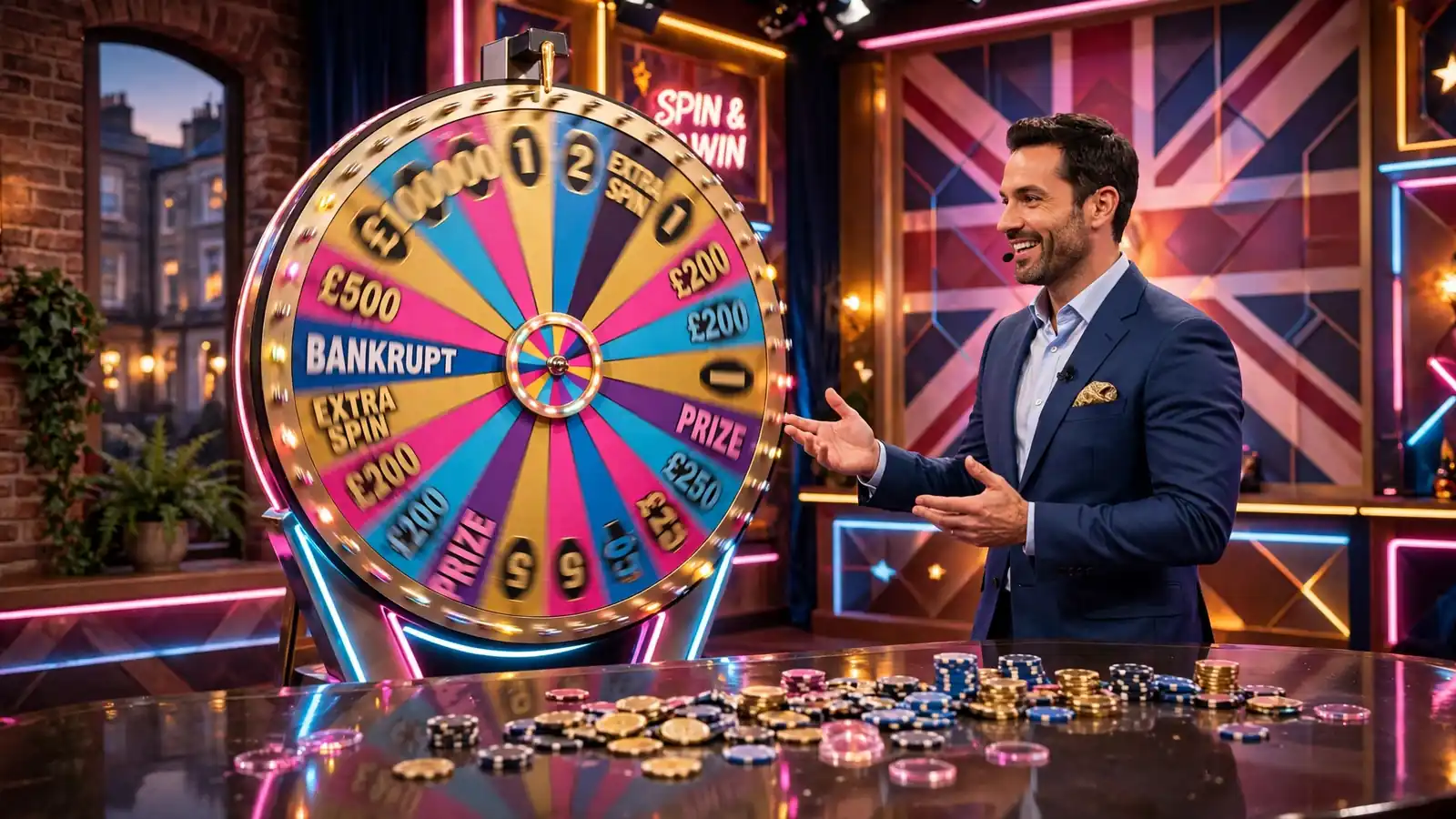
If you are considering a casino game with a crossing theme, look for its rules and the operator’s description of how wagers and results work. Compare those details, rather than inferring mechanics from a title or animation. That is the criterion that matters: confirmed rules, not resemblance to a familiar game idea.
A separate search for a Chicken Road casino promo code concerns an offer, not the game’s category. A code cannot establish how a game works, and the game’s theme cannot tell you whether a promotion applies. Keep those questions separate. Labels are not mechanics.
Casinos with Chicken Road: UKGC and Offshore Are Not the Same
Looking for a casino that carries Chicken Road is only one part of the decision. The operator’s regulatory status is a separate question, and the distinction matters more than a game listing.
A specialist review describes the UK online casino market in 2026 as having two sides: UKGC-regulated operators and offshore platforms outside the UKGC system. Offshore casinos may accept customers from the UK, but that does not make them UKGC-licensed. A game being listed on a site would not change the site’s status.
For customers in England, Scotland and Wales, an operator offering real-money gambling must hold the relevant UKGC licence, regardless of where the operator is based. Online gambling is legal in the UK through licensed and regulated sites. So, when assessing a casino, check whether it holds a current UKGC operating licence rather than relying on a general claim that it serves British players.
The practical comparison is straightforward: a UKGC licence places an operator within the British regulatory system; an offshore licence does not. Non GamStop sites may be accessible to UK players, but they operate outside that system. Access and local licensing are not the same thing.
No particular casino’s regulatory status confirms that it offers Chicken Road, and a game name alone cannot establish that. Keep the two checks separate: first identify the operator’s licence, then confirm the game directly with the operator. If the operator is outside the UKGC system, it is not a UK-licensed casino. A small distinction with real consequences.
Written by the editors at Rainbow Riches Casino 1.