European Roulette at UK Online Casinos: A Guide
 Available in GB
See how the 37-pocket wheel, betting options and game formats shape the way European roulette is played.
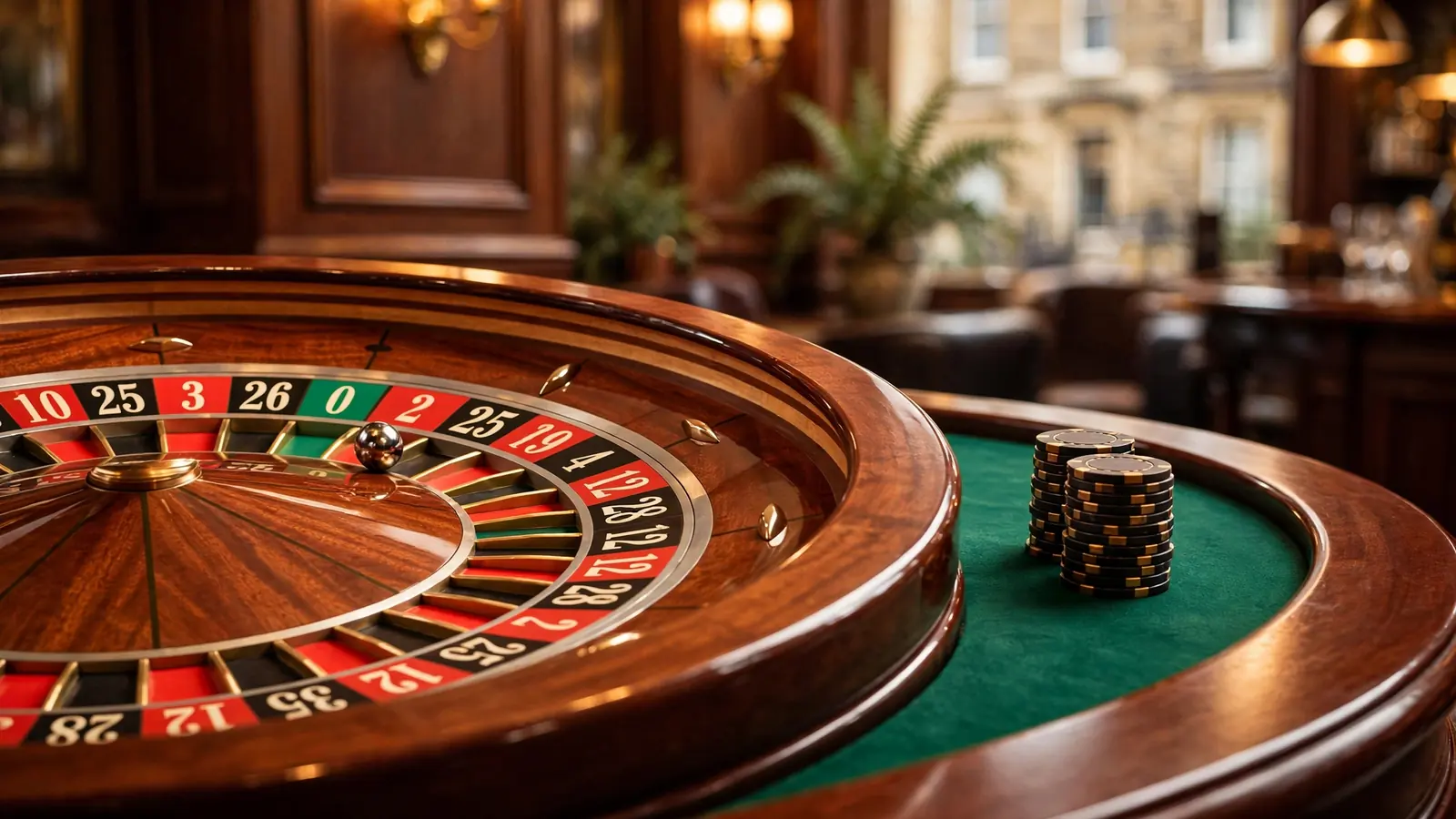
Table of Contents
- European Roulette’s Single-Zero Wheel and 2.70% House Edge
- How to Compare UK European Roulette Casinos
- How to Play European Roulette: Bets, Payouts and Chance
- RNG Wheels, Speed Roulette and Physical Live Wheels
- Single-Zero Tables, La Partage and Inside Bets
- Free European Roulette, Demo Play and Real-Money Stakes
- Reading the European Roulette Table Layout
- Roulette-Themed Slots: What the Available Facts Can—and Cannot—Tell You
- Live European Roulette with a Dealer
- European vs American Roulette: The Extra Zero Matters
European Roulette’s Single-Zero Wheel and 2.70% House Edge
European roulette is built around a wheel with 37 pockets: the numbers 1 to 36 and one green zero. When the wheel is spun, the ball comes to rest in one of those pockets. The single zero is the defining feature of this version, and it is central to understanding the game’s mathematics.
The wheel and the betting area serve different purposes. The wheel determines the result; the table gives you places to make selections before the spin. Whatever the layout looks like on screen, a European roulette result comes from the same set of 37 pockets. A polished interface, a themed backdrop or a different presentation does not change that underlying set.
The zero matters because it is an outcome in its own right. It is not a blank space outside the game or a neutral result that disappears from the calculation. It belongs to the wheel’s pockets, so it affects the chance of a selection winning and, in turn, the balance between possible returns and the operator’s mathematical advantage.
When choosing a UK casino for European roulette, payout timing is one practical detail to consider alongside the game itself. Use the stated withdrawal speed as a reference when deciding what matters to you.
Payout speed: 1-3 business days You can take x3bet’s stated payout speed of 1–3 business days into account when considering European roulette.
Payout speed: 1-3 business days You can take Britsino’s stated payout speed of 1–3 business days into account when considering European roulette.
Payout speed: 1-3 business days You can take NightWin’s stated payout speed of 1–3 business days into account when considering European roulette.
Payout speed: 1-3 business days You can take WinBeast’s stated payout speed of 1–3 business days into account when considering European roulette.
Payout speed: 1-3 business days You can take Dieselwin’s stated payout speed of 1–3 business days into account when considering European roulette.
Payout speed: 1-3 business days You can take Chanze’s stated payout speed of 1–3 business days into account when considering European roulette.
Payout speed: 1-3 business days You can take SlotoSport’s stated payout speed of 1–3 business days into account when considering European roulette.
Payout speed: 1-3 business days You can take BeOnBet’s stated payout speed of 1–3 business days into account when considering European roulette.
Payout speed: 1-3 business days You can take SpinFormula’s stated payout speed of 1–3 business days into account when considering European roulette.
Payout speed: 1-3 business days You can take NightLuck’s stated payout speed of 1–3 business days into account when considering European roulette.
That advantage is expressed as the house edge. For European roulette, it is 2.70%. In practical terms, the figure describes the game’s long-run mathematical margin: across a very large number of wagers, the expected result favours the house by that proportion of the total amount wagered. It is not a prediction of what will happen in a particular session, nor a promise that a casino will retain exactly that share of your money over a short run of play.
The distinction between a long-run average and an individual result is important. A spin has one winning pocket, and a short sequence can produce outcomes that look very different from the theoretical margin. You might see repeated wins, repeated losses or an uneven-looking pattern. None of those short runs changes the wheel’s 37 pockets or the game’s stated house edge. The arithmetic describes the structure of the game, not the order in which results will arrive.
The single zero is also why the house edge is not zero. Even when a bet appears to cover a broad group of outcomes, the green pocket remains part of the wheel and can prevent that selection from winning. The precise effect depends on the bet and its rules, which is why a casino’s table information matters when you move from understanding the wheel to assessing a particular wager. The basic point here is simpler: the zero is included in the game’s outcome set, and the 2.70% edge reflects that structure.

For someone comparing an online casino offering European roulette, the wheel description is a useful first check. Look for a clear statement that the game is European roulette and confirm that its rules identify a single zero. The label alone is less informative than the rules shown for the specific table. Different presentations may share the same wheel type while differing in interface, pace or other features; those details do not alter the basic single-zero definition, but they can affect what kind of play you prefer.
The house edge gives you a consistent mathematical reference point when considering the standard European version. It does not tell you whether a table is enjoyable, easy to navigate or suited to your preferred pace. Those are separate criteria. If your priority is the game’s underlying mathematical margin, the relevant figure is 2.70%; if your priority is how a particular casino presents the game, you will need to assess its table and rules as well.
It is also worth keeping the edge separate from ideas about prediction. A result does not become due because a particular number has not appeared, and a previous spin does not determine the next one. Each spin is a fresh outcome from the wheel. Looking for patterns may be part of the entertainment for some players, but it does not change the probabilities or remove the house edge.
The European wheel is therefore straightforward to describe: 37 pockets, numbered 1 to 36 plus a single zero, with a 2.70% house edge. That gives you the baseline for recognising the standard game online. The table presentation can vary. The wheel’s defining arithmetic does not.
Wheel Pockets 37 (1-36 and single zero)
House Edge 2.70%
Defining Feature Single-zero wheel
How to Compare UK European Roulette Casinos
A useful comparison starts with the criteria that affect your own play, not a vague claim that one casino is “the best”. You might value a clear game catalogue, visible return-to-player information or accessible account controls more than a large number of tables. The right choice depends on which of those matters most to you.
Check the licence before the lobby
For customers in Great Britain, online casino activity is overseen by the UK Gambling Commission (UKGC). A casino serving British players with real-money games must hold the relevant UKGC operating licence; a platform without a valid licence cannot legally offer real-money live roulette to British residents. Check the operator’s licence details against the Commission’s public register before depositing. A licence logo on a page is not a substitute for verifying the record.
This is the baseline, not a bonus feature. A comparison of game menus or account options is meaningful only after you have established that the operator is authorised to serve the market. UKGC licensees must also provide an internal complaints process and access to an approved Alternative Dispute Resolution service, giving you a defined route if a dispute is not resolved directly.
Compare the game information, not just the game count
A long roulette menu does not automatically make a casino a better fit. Look for European roulette by name and check whether the listing takes you to a usable game page, with the rules and RTP information accessible before you play. RTP is the game’s stated theoretical return over time; it is not a prediction of what you will receive in an individual session. If you cannot find the figure or the rules without hunting through unrelated pages, that is a practical weakness in the offer.
Compare how clearly the casino separates European roulette from other roulette options. A label should identify the version you are opening, rather than leaving you to infer it from a thumbnail or promotional description. This is a matter of transparent presentation, not a promise that one table will produce a better result.
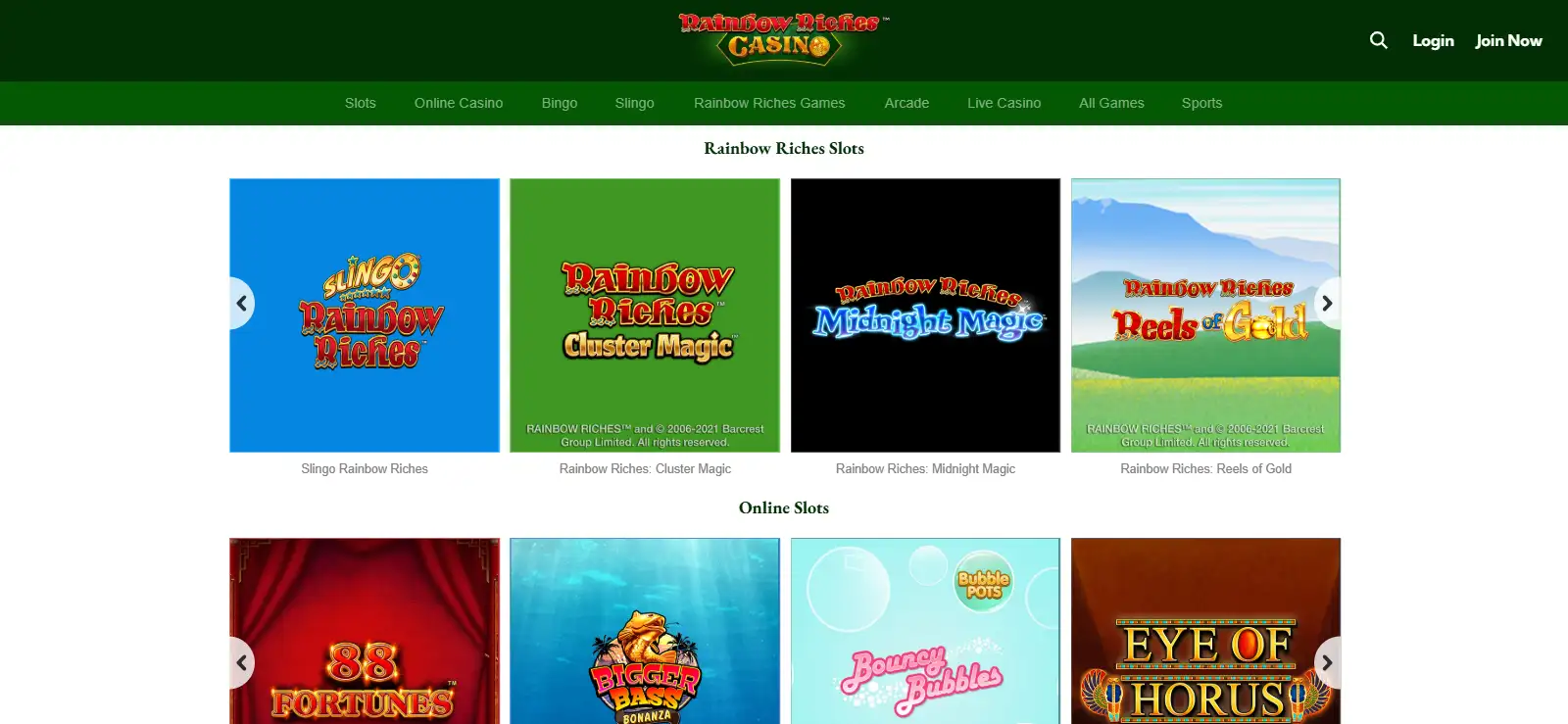
The number of available tables may matter if you want a choice of interfaces or providers, but count only games you can actually access in your account and region. A catalogue can look extensive while making the relevant details hard to confirm. Clear labels win.
Put safer-gambling controls on the checklist
Before you deposit, check whether the account area makes its controls easy to find and use. UKGC-licensed live casino operators must offer deposit limits, loss limits, session time reminders, reality checks, cool-off periods and GamStop self-exclusion. These should be practical account tools, not information buried in a general help page.
Remote operators must prompt new customers to set a financial limit before their first deposit and provide accessible account-level limit controls. They must also verify your age before allowing you to deposit. Compare the route to these settings: can you locate them from your account, understand what each one does and adjust limits without navigating a maze? The presence of a responsible-gambling link alone tells you less than the controls available in practice.
UKGC licensees are also required to contribute to the Research, Education and Treatment levy. That obligation sits behind the regulatory framework; it is not a reason to overlook whether an operator’s tools are clear to you.
Check payment and account terms
Payment conditions are another point of comparison, even when the roulette lobby looks similar. UKGC-licensed casinos cannot accept credit cards for gambling, and operators cannot accept wallet payments where the wallet lets credit-card funds be used for gambling. Read the cashier’s terms before choosing a payment route rather than assuming that every displayed method can be used for casino play.
If you are comparing an offer alongside roulette access, read its terms separately from the game information. Bonus conditions can affect which games count and how much they contribute, so do not treat a headline promotion as part of the roulette game itself. The relevant terms should be accessible before you opt in.
A tidy comparison table can keep the decision grounded: licence verified, European roulette identifiable, RTP and rules accessible, safety controls reachable, and account terms clear. The strongest option by those criteria may not have the largest catalogue. That is fine. The useful winner is the one that fits your priorities while making the important information easy to check.

How to Play European Roulette: Bets, Payouts and Chance
To play European roulette, you choose a bet before the spin and decide how much to stake. The payout depends on the type of bet and whether the result matches it. Learning the payout table helps you understand what a win returns; it does not make the result predictable.
Inside bets: one number or a group
A straight-up bet covers one number. If it wins, it pays 35:1: for every unit staked, you receive 35 units in winnings, with your original stake returned as well. This offers a larger payout than bets covering more outcomes, but the number you chose still has to be the result.
A split bet covers two adjacent numbers and pays 17:1. A street bet covers a horizontal row of three numbers and pays 11:1. These bets differ in how many numbers they include, but the payout alone does not tell you how likely a particular result is. It is a return rate for a winning bet, not a promise of profit.
Outside bets: broader selections
Outside bets cover broader result groups. Red or black, even or odd, and high or low each pay 1:1 when successful. A winning bet therefore returns winnings equal to the stake, plus the stake itself. These options may look simpler because they cover a group rather than one number, but a run of results can still go against your selection.
When comparing European roulette payouts, keep the two parts separate: what your bet covers and what it pays if it wins. A higher payout is not automatically a better choice. It comes with a narrower selection, while a lower payout applies to a broader one. The choice depends on whether you prefer a particular number or a wider category, not on any ability to control the next result.
Rules are not a prediction system
Knowing how a bet works can prevent a mistake when placing it. It cannot reveal what the next spin will produce. Roulette outcomes are determined by chance, so a previous result does not make a particular number or colour due.
The Martingale system, for instance, doubles the bet after each loss in an attempt to recover earlier losses with a later win. That staking pattern does not change the odds or predict when a win will arrive. A losing streak can put pressure on your bankroll, and each larger stake means more money is exposed while the sequence continues.
A practical way to approach a session is to decide what you are comfortable staking before you begin, then treat each spin as a separate outcome. Choose a bet because its coverage and payout suit your preference, not because a pattern seems to be forming. VIP labels do not alter the meaning of a payout ratio: the terms for the specific table are what matter.
Know the bet. Accept the chance.
RNG Wheels, Speed Roulette and Physical Live Wheels
An online European roulette game can present its spin in different ways. The key distinction is whether software generates the result, a physical wheel is streamed, or a faster format compresses the time between rounds. If you are comparing online casinos with European roulette, that delivery method affects pace and atmosphere; it does not make a spin predictable.
RNG roulette: software-generated spins
RNG roulette uses a random number generator to produce each result, with graphics representing the wheel and ball. There is no studio feed or physical ball drop to watch. The practical advantage is pace: you can move from one round to the next without waiting for a live table. Minimum stakes can also be lower; some RNG games start at 10p.
This format suits you if you value quick play or want to keep stakes small. It may feel less involving if seeing a real wheel and dealer matters more than speed. Check the game information for its stated RTP and rules rather than assuming that every version has identical settings. UKGC-licensed operators should make RTP information accessible.
Speed roulette: a quicker live format
Speed roulette is designed to shorten the gap between rounds. One specialist review reports rates of more than 150 spins per hour for speed roulette, compared with 80–100 spins per hour at a standard table. Treat those figures as a comparison from that review, not a fixed rate for every game: the pace can depend on the particular table and how quickly you make decisions.
The quicker rhythm may suit you if you want less waiting, but it leaves less time to pause between rounds. A faster interface does not improve the odds or provide a way to forecast the next result. If you prefer to consider each decision carefully, a standard table or RNG game may be a better fit.
Software-generated spins with fast pace and potentially lower minimum stakes.
A quicker live format with more spins per hour than standard tables.
Streamed studio tables with a human dealer and physical ball drop.
Physical wheel: a streamed table
Live roulette streams a real wheel from a studio. You see a human dealer and the physical ball drop, rather than an animation standing in for the wheel. That can make the experience feel closer to a casino table, while still allowing you to play online. The trade-off is the time involved in running a live round: the stream follows the table’s real sequence rather than letting you move instantly between simulated spins.
For a real-money live game in Great Britain, the operator must hold a UK Gambling Commission licence. A platform without a valid UKGC licence cannot legally offer real-money live roulette to British residents. UKGC-licensed live casino operators must also provide deposit and loss limits, session reminders, reality checks, cool-off periods and GamStop self-exclusion. These are account controls, not features of the wheel itself.
Choose by the criterion that matters most to you: RNG for a brisk software-led game, speed roulette for a quicker live rhythm, or a streamed physical wheel for the visible dealer and ball. None changes chance. The format changes the experience.
Single-Zero Tables, La Partage and Inside Bets
A European roulette table is defined by its single green zero, but the rules attached to that pocket matter as much as its appearance. On a standard single-zero table, zero is a distinct outcome: it is not red or black, odd or even, or part of the high or low range. Those outside bets therefore lose when the ball lands there. The zero is the small exception that shapes the table’s house edge.
Some roulette variants have additional green pockets. Each extra pocket creates another outcome that can defeat a bet covering the numbered results, so the precise table rules are worth checking before you place a stake. Do not assume that a green pocket follows the same treatment as the single zero on a European table. The number of pockets and any special rules should be clear in the game information.
What La Partage changes
La Partage is a specific exception for even-money bets on a table that offers the rule. If the ball lands on zero, half of the stake on a qualifying bet is returned rather than the whole stake being lost. The remaining half is lost. This reduces the house edge on those bets to 1.35%, compared with the standard European roulette house edge of 2.70%.
The distinction is narrow: La Partage applies to even-money bets, not to every wager on the table. If you place an inside bet on a number or group of numbers, do not assume that a zero result will return half your stake. Check the table’s rules to see which bets qualify.
That makes La Partage useful as a table-selection criterion if you prefer outside bets. It does not change the result of a spin or make a particular number more likely to appear. It changes what happens to a qualifying stake when zero appears. A modest rule change, with a measurable effect.
French roulette has the lowest house edge among standard variants because it combines La Partage with En Prison. These are separate rules, so check which one the table actually provides rather than treating “French” as a guarantee of a particular outcome for every bet.
Inside bets and the zero
Inside bets are placed on the numbered part of the table, selecting a number or a smaller group of numbers. They offer a different pattern of coverage from outside bets, which are placed on broader categories such as colour or parity. The relevant point here is how each interacts with zero: an outside category that excludes zero can lose when it lands, while an inside selection wins only if the result falls within its chosen numbers.
Before betting, read the table’s displayed rules and identify whether La Partage or En Prison applies, and to which wagers. The felt layout alone cannot tell you how a zero is settled. Two tables that look similar may handle the same result differently if their rules differ.

For a single-zero table, compare the pocket count, the treatment of zero and the bets eligible for any special rule. If you mainly use even-money bets, La Partage is the key distinction. If you choose inside bets, focus on whether the table’s zero rule affects them at all. The better fit depends on your betting choice, not on the table’s label alone.
Free European Roulette, Demo Play and Real-Money Stakes
A free European roulette game lets you practise without placing a cash wager. A demo can help you get used to the controls, follow a round and see how the table works, but it does not reproduce the consequences of staking your own money. Treat it as a way to learn the interface, not as evidence that you can predict what the wheel will do.
The difference matters when you switch to real-money European roulette. You are then wagering funds, and results can affect your balance. No pattern learned in free play changes the chance-based outcome of a later spin. Set a limit you can afford before playing, and stop when you reach it; practice mode cannot prepare your bankroll for losses.
Check game weighting before accepting bonus funds
If you plan to use bonus funds, look beyond the headline offer to the terms for roulette. Game weighting determines how much a roulette wager contributes towards the wagering requirement. The rate can depend on whether you choose an RNG game or a live table, so “roulette counts” is not enough detail to assess the condition.
A specialist review reports that many UK operators count roulette wagers at 10% to 20% of the requirement, while RNG roulette may receive 100% weighting and live roulette may count at 10% or 20%. These are reported rates, not a promise that every offer follows the same schedule. Read the specific bonus terms before wagering: a lower contribution means roulette play advances the requirement more slowly.
No-deposit offers can have a separate rule for live roulette. A specialist review reports that some operators exclude live play from these requirements, while those that include it may assign a contribution between 0% and 10%. Check both the game eligibility list and the stated rate; an eligible game can still contribute little or nothing.
Attention Game weighting can vary significantly; live roulette may count for much less towards wagering requirements than RNG roulette.
A specialist review also reports that, from January 2026, licensed operators are subject to a maximum wagering requirement of ten times the relevant bonus amount. Read the offer’s own wording to see how its requirement is calculated and which games qualify. A cap does not make every bonus equally useful: game weighting and other conditions still affect how play counts.
Make the switch deliberately
Free online European roulette is useful when your priority is learning the sequence of a round without wagering. Real-money play is different because every stake is yours to lose. If you move from demo play to cash play, decide your spending limit first, check the game’s bonus terms if an offer is involved, and do not treat a wagering requirement as a reason to keep playing. The distinction is simple. The stakes are not.
Reading the European Roulette Table Layout
A European roulette table pairs a numbered betting grid with a separate representation of the wheel. The grid is where you place your chips; it is not a diagram of the order in which pockets sit around the wheel. Keeping those two features distinct makes the screen easier to read before a spin.
The European wheel has pockets numbered 1 to 36, plus a single zero. On the betting layout, the numbered spaces are arranged in three vertical columns. Each horizontal row contains neighbouring numbers from the grid, while each column groups numbers running down the table. The zero sits apart from the main numbered block, generally at one end of the layout.
That separation is useful when you are orienting yourself: the zero is a distinct pocket, not another space within the numbered grid. The table’s position for zero may vary slightly between game interfaces, so check the labels on the screen rather than assuming every design uses identical placement.
Reading the grid
Look first for the large numbered area. Its rows and columns form the foundation of the layout, with the numbers printed inside individual spaces. Outside the grid are broader betting areas, positioned beside or below the numbered block. These let you select groups of numbers without clicking each individual space. Their labels describe the group covered; they do not change the underlying wheel.
The boundaries between spaces matter. A chip placed in the centre of a numbered space marks a selection of that number. A chip positioned on a line or at a corner can select neighbouring spaces, depending on the game’s interface. Some tables show a highlighted area or a small betting marker after you click, which helps confirm what you have selected. If the highlight does not match your intention, remove the chip before the betting window closes.
The wheel and grid serve different purposes. The wheel presents the pockets around its rim; the grid gives you a clear, fixed place to make selections. The number order on the wheel does not run across the table in the same visual sequence as the grid. Do not treat a nearby screen position as evidence that two pockets are neighbours on the wheel.
- Use the grid to place selections
- Verify on-screen markers before the window closes
- Check the table’s betting limits
- Treat the grid as a map of the wheel’s sequence
- Assume nearby grid positions are neighbours on the wheel
- Use the layout as a predictive tool
A quick pre-spin check
Before placing a chip, identify the numbered space or labelled outside area you intend to use. Then check the on-screen marker and the table’s betting limits, which are displayed by the game. This is a layout check, not a way to forecast where the ball will land: no arrangement of spaces turns the grid into a predictive tool.
A roulette strategy can guide how you organise selections, but the layout itself only shows where bets are placed. The grid is a map, not a forecast.
Roulette-Themed Slots: What the Available Facts Can—and Cannot—Tell You
A slot with roulette imagery is not the same game as European roulette. The shared theme may include a wheel, numbers or casino-style graphics, but that does not make the slot a roulette table. In a slot, you play the game’s own system; the single-zero wheel and its 2.70% house edge describe European roulette, not every product that borrows its appearance.
That distinction matters when a title includes words such as “European Roulette”, “Gold” or “Platinum”, or advertises a 3D presentation. Those labels alone do not establish how a game works, what features it contains, what its return to player (RTP) is, or whether its outcomes follow the rules of a physical roulette wheel. A polished wheel graphic is still a graphic. The name is not a rulebook.
Separate the theme from the mechanics
Before treating a roulette-themed slot as a roulette alternative, look for its actual game information. The rules should explain what you do during play and how a result is determined. Check the displayed RTP as well: it is a game-specific figure, not something that can be inferred from the word “roulette” in a title.
European roulette odds apply to bets on a European wheel. They should not be used to estimate the chance of winning on a slot, even if its screen shows numbered pockets. Likewise, the familiar single-zero advantage belongs to that wheel format; a slot’s theme does not demonstrate that it uses the same probabilities.
This keeps two comparisons separate. If you want a roulette wheel, assess a roulette game by its rules and format. If you want a slot with casino styling, assess that slot using its own rules and published RTP. The better fit depends on which kind of game you want, not on which title sounds closer to roulette.

What a title cannot confirm
A game name cannot, by itself, verify a “gold” or “platinum” version’s features, a 3D mode, the provider, or any particular payout structure. Nor does it confirm that a product offers a European roulette wheel. Treat those as details to verify in the game information, rather than assumptions to build into a comparison.
For real-money play, use a UKGC-licensed operator. The operator must verify your age before allowing a deposit, and its game information should be accessible before you stake. If a listing does not clearly identify whether the product is a slot or a roulette game, do not use its title to fill in the blanks. Different format, different rules.
Live European Roulette with a Dealer
A live European roulette table brings a physical wheel to your screen through a studio stream. You watch a human dealer set the wheel in motion and release the ball, rather than seeing a result generated by software. That visible process is the defining difference: the game unfolds in front of you, with the dealer managing each round.
The pace is slower than a rapid digital game. Live dealer play runs at around 50 to 60 spins per hour, while RNG American roulette can typically reach 150 to 200 or more. The comparison is useful if you are choosing between a streamed table and a fast sequence of simulated rounds. A live table gives you time to follow the wheel and the dealer’s actions; it also means fewer spins in the same period.
A real wheel does not make an outcome predictable. Each ball drop remains a game of chance, and watching the dealer cannot tell you where the ball will land. The stream changes how you experience a round, not your ability to forecast its result. If pace matters most, the quicker format may suit you better; if seeing a physical wheel and a human dealer matters more, the live table has the clearer fit. There is no universal winner—only a better match for your preference.
For real-money play in Britain, the operator must hold a valid UK Gambling Commission licence. A platform without one cannot legally offer live roulette for real money to British residents. Check the licence on the Commission’s public register before depositing. Operators must also verify your age before allowing a deposit.
UKGC-licensed live casino operators must provide deposit and loss limits, session reminders, reality checks, cool-off periods and GamStop self-exclusion. These controls matter even when you are focused on the stream: the dealer-led format can feel more like a continuous event, but it is still gambling. Set limits before you start and use the account controls if you need to pause or stop.
European vs American Roulette: The Extra Zero Matters
The clearest difference between European and American roulette is the number of green pockets. A European wheel has numbers 1 to 36 and one zero, making 37 pockets in total. The standard American version adds a double zero, giving it 38 pockets.
That extra pocket changes the odds across the table. The house edge is 2.70% on European roulette, compared with 5.26% on American roulette. If you are choosing between the two versions of an online European roulette casino game and an American table, the European wheel has the lower house edge by this measure. The difference comes from the wheel, not from a change to the standard payouts.
| Version | Pockets | House edge |
|---|---|---|
| European | 37 | 2.70% |
| American | 38 | 5.26% |
The comparison is less favourable for the American basket bet, which covers the zero, double zero, 1 and 2. Its house edge is 7.89%. That makes the bet a particularly costly choice relative to the standard American game; a familiar-looking group of numbers does not make its odds more generous.
A further variation has been noted in a specialist review of UK online tables: some American wheels include a third green pocket marked 000. That version has a stated house edge of 7.69%. Treat this as a table-specific variation, not a defining feature of American roulette. Check the wheel and rules shown in the game before playing, because the label alone may not tell you which layout is in use.
For a straightforward comparison, use the pocket count and the stated house edge rather than the game’s presentation. A European roulette casino game is the lower-edge option of these standard variants. American roulette has more green pockets, and the basket bet adds a further disadvantage. The better fit depends on what you value, but the mathematical distinction is plain.
Should I play American or European roulette if I’m in the UK?
European roulette has the lower house edge: 2.70% compared with 5.26% for standard American roulette. Some American tables with a 000 pocket have a 7.69% edge.
What is the house edge on European roulette compared to American roulette?
European roulette has a 2.70% house edge, compared with 5.26% for American roulette. The American basket bet has a higher edge of 7.89%.
How does roulette actually work?
You choose where to bet on the table, then the wheel is spun and the ball lands in one of its pockets. European roulette has 37 pockets: numbers 1 to 36 and a single zero.
How does the 10x wagering cap affect roulette bonuses?
Since January 2026, licensed UK operators can require bonus wagering of no more than 10 times the bonus amount. Roulette may contribute differently toward that requirement: live roulette often counts at 10% to 20%, while RNG roulette often counts at 100%.
Written by the editors at Rainbow Riches Casino 1.