
Monopoly Live Casino UK: Format, Play and Checks
 Available in GB
A practical guide to streamed dealer play, betting interfaces, table costs, limits, demos and the proper role of roulette statistics.

Table of Contents
- What the Live Casino Format Means for Monopoly Live
- Playing Online: Pace, Connection and Table Costs
- Choosing a Casino by the Criteria That Matter to You
- How to Start a Live Game and Set Limits
- Live Casino Games: Roulette, Blackjack and Baccarat
- What History, Statistics and Betting Systems Can—and Cannot—Tell You
- Checking a Casino Site Before You Play
- Roulette Stats and Tips: Use Them for Context, Not Prediction
- What to Check Before Trying a Demo
- Free Play, Reviews and Bonus Terms
What the Live Casino Format Means for Monopoly Live
The phrase “Monopoly Live” can point you towards a casino search, but it does not by itself explain what a particular table offers. The useful distinction is between a name used to describe or promote a game and the live-dealer format in which a casino game is presented. The format has a clear basic structure: gameplay is streamed in real time from a studio, a human dealer runs the game, and you place bets through an on-screen interface.
That arrangement brings together two different parts of the experience. The dealer and studio provide the live presentation; the betting interface is how you take part remotely. You are not physically at the table, and your choices are submitted through the casino’s software rather than communicated by placing chips beside a dealer. The stream shows the live game as it unfolds, while the interface provides the means to enter bets.
This is the central meaning of a live casino game. It is not simply a game with “live” added to its title, nor does the phrase alone tell you the rules, available bets or presentation of a specific table. Those details belong to the individual game and its published rules. A brand or search phrase should not be treated as proof that every casino offers the same experience under the same name.
When choosing a UK casino for Monopoly Live in 2026, payout timing is one practical detail to consider. Use this list as a reference point when deciding what matters to you.
Payout speed: 1-3 business days You can expect payouts to take 1–3 business days.
Payout speed: 1-3 business days Payouts are listed as taking 1–3 business days, a useful timing detail for you to consider.
Payout speed: 1-3 business days You can expect a stated payout timeframe of 1–3 business days.
Payout speed: 1-3 business days The available payout information gives you a timeframe of 1–3 business days.
Payout speed: 1-3 business days Payouts are listed as taking 1–3 business days, giving you a clear timing estimate.
Payout speed: 1-3 business days You have a stated payout timeframe of 1–3 business days to factor into your choice.
Payout speed: 1-3 business days The stated payout speed is 1–3 business days, which may help you assess whether the timing suits you.
Payout speed: 1-3 business days You can refer to a listed payout timeframe of 1–3 business days.
Payout speed: 1-3 business days Payouts are listed as taking 1–3 business days, a practical detail for you to keep in mind.
Payout speed: 1-3 business days The available information states a payout timeframe of 1–3 business days for you to consider.
What happens in a live-dealer session
A live-dealer game is organised around a studio broadcast. A human dealer conducts the game in real time, and the casino sends the video feed to players online. You follow what is happening on screen and use the betting controls to submit your choices. The session is therefore not just a recording or an animation: the dealer’s actions are part of a live broadcast.
The interface is the practical link between you and the game. It presents the options available for betting and lets you make a selection electronically. The dealer does not receive a physical stake from you across a table; your input goes through the online system. The streamed game and the on-screen controls serve different purposes, but both are part of the same session.
This distinction matters when you are trying to understand what “live” means in a casino description. It refers to the real-time studio stream and human dealer, not to a promise about a particular title’s theme or rules. A game may be presented with a recognisable name or visual style, but that does not establish how its rounds work. The rules displayed for the actual table are what explain the game itself.
The format also differs from simply watching a casino broadcast. You use the interface to place bets as a participant in the online session. The dealer conducts the game, while the software handles the remote betting interaction. The stream gives you a view of the live activity; the interface makes your participation possible.
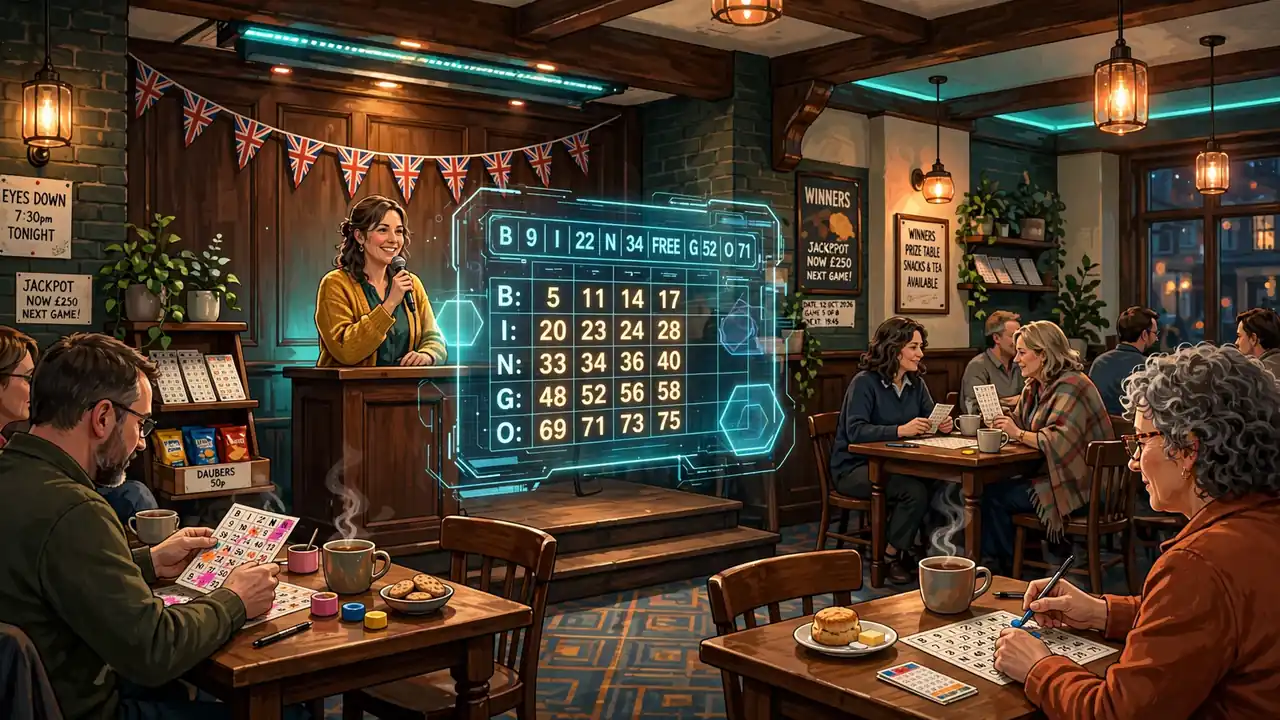
What the name does—and does not—tell you
When you look for a Monopoly-themed live casino experience, separate three questions: what the name refers to, whether the offering is actually a live-dealer game, and what rules apply at the table. These are related, but they are not interchangeable. A title can suggest a theme; the live-dealer format describes how a game is delivered; the table rules explain how it is played.
That separation avoids an easy mistake: assuming that a familiar name guarantees a specific format. A casino page may use a name in a heading, search listing or promotional description. The decisive detail for the format is whether the game is streamed from a studio with a human dealer and uses an on-screen betting interface. The decisive detail for play is the table’s own explanation of its rules and available bets.
The same care applies to wording such as “Monopoly Live casino” or “live Monopoly casino.” These phrases can describe what a player is looking for, but they are not a substitute for checking the actual game presentation. The name alone does not tell you whether a session is live, what you can bet on, or how an outcome is settled. A label is not a rulebook.
A brand name or search phrase is not a substitute for checking the actual game rules and the operator’s licence status.
The UK licensing condition
In the UK, a live-dealer casino is legal only if it holds a licence from the UK Gambling Commission. This applies to the operator providing the gambling service, not merely to the studio or the dealer visible in the stream. Seeing a human dealer on screen does not establish that the casino is licensed to serve UK players.
That is an important distinction because the live presentation can look separate from the website where you place bets. In practice, the streamed table is offered through an online casino, and it is that operator’s licence status that matters. The dealer’s presence explains the format; it does not replace the licensing condition.
So, when considering Monopoly-themed live casino play, treat the live format and the UK legal condition as separate checks. First identify whether the offering is genuinely a live-dealer game, with real-time studio gameplay and betting through an on-screen interface. Then make sure the casino operator holds a UK Gambling Commission licence. Neither the theme nor the stream is a substitute for that licence.
The format is straightforward. The label can be less so.
Playing Online: Pace, Connection and Table Costs
A live session asks for more time and a steadier connection than digital play. The action is streamed from a real table, so each round follows the dealer’s pace rather than moving as soon as you make a choice. That difference affects how many decisions fit into a session and how long you may be waiting between them. It is part of the format, not a technical fault.
If you are looking to play Monopoly Live online, consider these conditions before settling in. The name may be the focus, but the practical experience still depends on the live table and the connection carrying its stream. A faster digital game and a live broadcast do not offer the same rhythm.

A slower rhythm
Digital games can move directly from one round to the next. Live games include the dealer’s actions and the time players have to place bets, so the interval between rounds is longer. You may need to wait while the table completes a round, even when you are ready to act. That can make a live session feel more social and observable, but it also means less control over the pace.
This matters if you have only a short time available or prefer frequent decisions. A session that feels brisk on a digital game may feel stop-start at a live table. Conversely, if you want to follow the action as it unfolds, the slower pace may suit you. Neither format is automatically better; the useful criterion is whether the round speed matches the kind of session you want.
Keep the pace in mind when deciding how long to stay. A slower game can make time feel different, and waiting for a round does not make the next one more likely to produce a particular result. Treat the interval as part of the session, not as a reason to add more bets. Slow by design.
Connection is part of the experience
A stable internet connection is necessary for live play because the game reaches you as a real-time stream. If the connection drops, the picture or sound may pause, and you may lose a clear view of the table while a round is in progress. Even when the betting interface remains visible, a delayed or interrupted stream makes it harder to follow what is happening.
Unlike digital games, live casino play depends on a real-time video feed, making a stable internet connection essential for an uninterrupted experience.
Before playing, use a connection you can rely on and avoid starting while moving between networks or dealing with repeated interruptions. If the stream becomes unstable, pause rather than trying to compensate by acting quickly. A live table has its own pace; rushing to catch up can make it harder to keep track of your decisions.
Connection quality also shapes how enjoyable the session feels. A clear, continuous stream lets you follow the dealer and the round; frequent buffering turns that same format into waiting. This is a practical difference from digital play, where the game does not depend on receiving a live video feed. If uninterrupted access matters to you, the connection is part of the decision, not an afterthought.
Minimum bets affect the session cost
Live tables have higher minimum bets than digital versions. That changes the cost of taking part even if you intend to make only occasional bets: the table’s minimum sets a floor for each wager, and a series of rounds can add up. Check the displayed minimum before joining and consider whether it fits the amount you have set aside for the session.
A specialist review has reported live roulette and baccarat starting at around 20p, while blackjack tables can have higher starting limits. That is one reported snapshot, not a dependable price list for every table or a promise about what you will find. Minimums vary by table, so rely on the amount shown for the specific game you are considering rather than carrying a figure over from another session.
The comparison with digital play is straightforward: lower entry points may be available there, while a live table can require a larger stake per round. If that difference would make you uncomfortable, the live format may not suit your budget. Do not raise your budget simply to meet a table minimum; choose a different option or leave the table.
For a monopoly live online casino session, the sensible test is therefore not just whether the stream loads. Consider whether you can follow the slower rounds, maintain a steady connection and accept the minimum stake for the table. These conditions apply to live play generally. They do not make a particular table cheaper, quicker or more suitable for you.

Choosing a Casino by the Criteria That Matter to You
There is no single casino that is best for every player. The more useful question is which site meets your priorities: legal status, clear table rules, relevant bonus terms or the kind of live-game experience you want. Treat those as separate criteria rather than letting a prominent offer decide for you.
For a UK player, legal status is a starting condition, not a bonus feature. Remote operators serving the British market must hold the relevant UK Gambling Commission licence. If a site does not meet that requirement, it should not make your shortlist, however polished its presentation may be. This gives you a firm first filter before you compare anything else.
Compare what you can verify
Once legal status is clear, look for information that can be checked rather than claims that sound reassuring. Table rules matter because they explain how a game works and what conditions apply. Read them before choosing a table, and compare the wording across sites if you are deciding between them. A clear explanation is more useful than a broad promise of an exciting live experience.
Keep the name of a game separate from the evidence about its availability. A search for a Monopoly Live casino may lead you to sites that discuss the game, but that alone does not establish what a particular operator offers or which rules apply there. Confirm the details on the operator’s own table information. If rules are absent or difficult to understand, that is a meaningful comparison point: you have less information on which to base a decision.
You can organise the comparison around your own priorities:
| Criterion | What to check | Why it may matter |
|---|---|---|
| UK licensing | Whether the operator holds the required UK Gambling Commission licence | It is a condition of legal service to UK players |
| Table information | Whether the relevant rules are accessible and clear | You can understand the conditions before selecting a table |
| Bonus terms | Whether live games qualify, and how they count towards wagering | An advertised offer may not suit live play |
| Personal fit | Whether the available information matches what you want from a session | A good choice depends on your priorities, not a general ranking |
This is not a scoring table with a universal winner. You might place the greatest weight on clear rules and disregard offers altogether. Another reader may want to know whether an offer can be used for live play. The better choice changes with the criterion.
Treat the bonus as a separate decision
Do not assume that a casino bonus applies to every game. A specialist review describes UK welcome offers as often centred on slot free spins that cannot be used at live tables. That is a reason to check the specific offer, not to assume that every operator follows the same terms.
Even where a promotion does cover live games, its contribution towards wagering requirements may be limited. Live games can count for only a small share, with a stated example of 10% weighting. That can make an offer less relevant to someone choosing a casino primarily for live play. Read the terms for the eligible games and their weighting before opting in; the headline value alone does not show how useful the offer is to you.
Decide what “best” means for you
A practical comparison starts with exclusions. Remove any option that fails the licensing condition or leaves essential table information unclear. Then compare the remaining choices against the things you value: rules you can understand, bonus terms that fit your intended play, or simply a suitable live table.
Do not treat popularity, a results label or a large promotional headline as proof that a casino is a better fit. Those details do not replace licensing or explain the rules. Nor does a general “best” label tell you which criteria were used to reach that judgement.
Choosing a Casino
The strongest choice is one that meets your priorities on verifiable grounds rather than loud promotional claims.
If you are assessing a casino for Monopoly Live, keep the decision grounded in information the operator actually provides. Confirm that the game is available there, read its applicable rules, and assess any offer separately. The strongest choice is the one that meets your priorities on verifiable grounds—not the one with the loudest claim.
How to Start a Live Game and Set Limits
Before opening a live table, decide what you are willing to spend and what would make you stop. Treat that amount as the cost of entertainment, not money you expect to recover or turn into a profit. Once it is gone, end the session; do not add funds to get back to an earlier balance.
The same rule applies if you are ahead. A win does not change the limit you set before playing. Decide in advance when you will stop, and leave when you reach that point rather than increasing your stakes because the session is going well. Limits work only when you keep them.
A simple start-up sequence
A live dealer game streams play from a studio, where a human dealer runs the table. You make your selections and place bets through an on-screen interface. The screen may show the live action alongside the controls for choosing a stake and confirming a bet, but the exact layout depends on the game and the operator.

Use a short checklist before joining:
- Confirm the table and its rules. Read the instructions displayed for that table, including which bets are available, how they are settled and any relevant limits. Do not assume that rules you remember from another table apply here.
- Check the paytable. Make sure you understand what each available bet can return and how the table handles its outcomes. If a term or settlement is unclear, pause and find an explanation before staking money.
- Set your session budget. Choose an amount you can afford to lose without affecting bills, essentials or other commitments. Keep it separate from money reserved for those purposes.
- Choose a stopping point. Decide in advance when you will finish, whether the session is going well or badly. Do not extend the session to recover losses or to keep a winning run going.
- Place only considered bets. Use the interface to select a bet and review it before confirming. If the screen does not make your selection clear, do not submit it until you understand what is selected.
The confirmation step matters. Live play happens on screen, but a mistaken selection is still a real stake once accepted. Take a moment to check the bet and amount each time; speed is not a useful target.
Keep the session manageable
Avoid treating each result as a signal to raise or change your stake. A losing result does not create an obligation to win the money back, and a winning result does not mean the next bet is safer. If you feel tempted to ignore your budget, take that as a reason to stop rather than as a reason to continue.
It can help to decide beforehand what you will do if you feel frustrated, distracted or caught up in the action. A break or ending the session is a better response than increasing the stake. Do not borrow or use money set aside for necessities to continue playing.
Starting a Live Game
- Confirm the table and its rules
- Check the paytable for returns and settlements
- Set a session budget you can afford to lose
- Decide on a clear stopping point
- Review the bet and amount before confirming
If the table rules, interface or settlement are confusing, leave the table and clarify them before placing another bet. Choosing not to play is a valid outcome. The purpose of these checks is to keep the session within boundaries you chose while thinking clearly.
If you are considering a particular Monopoly Live table, treat its displayed instructions as decisive: do not assume that another live game’s controls or rules apply. This guide describes a general way to prepare for a live table, not a promise about a specific title or feature.
This content is for entertainment purposes only and is not gambling advice.
Live Casino Games: Roulette, Blackjack and Baccarat
A search for a Monopoly Live game show can blur two different subjects: a branded game and the familiar table games offered by live casinos. The rules below describe roulette, blackjack and baccarat in general; they are not a claim that any of them forms part of Monopoly Live. If you are trying to understand how a particular Monopoly Live game works, its own rules are what matter.
Roulette: a physical wheel in the live version
In live dealer roulette, a dealer spins a physical wheel and the ball settles into one of its numbered pockets. Your selection wins when it matches the number where the ball lands. The wheel and the dealer’s actions are visible as they happen.
Computerised roulette works differently: a Random Number Generator determines the result rather than a dealer spinning a physical wheel. The main distinction is the source of the result, not a promise that one format is more predictable. Each game’s own rules and paytable explain the available bets and returns.

Blackjack: try to beat the dealer
In blackjack, you aim to finish with a hand worth 21 points, or as close to it as possible without going over, and beat the dealer’s hand. A live table lets you watch a human dealer handle physical cards in real time. That makes the dealing process visible, but it does not change the objective of the game.
The key comparison is between your hand and the dealer’s, not between your result and another player’s. Keep the rules for the specific table in view: the familiar aim is straightforward, but details can vary between games. Straightforward aim; no guaranteed outcome.
Baccarat: choose a hand, or a tie
In baccarat, you can bet on the Player hand, the Banker hand or a Tie. The aim is to predict which hand will finish closest to nine. “Player” and “Banker” label the two hands; they do not mean you are betting on yourself or on a particular person at the table.
That makes the basic choice easy to state, though it is still a bet on an uncertain result. Check the table’s rules and paytable before choosing, so you know how each outcome is settled and paid.
These games share the live-casino setting, but not the same objective. Roulette asks you to select an outcome on a wheel; blackjack is a contest against the dealer’s hand; baccarat centres on which of two hands finishes nearer nine. Those distinctions are more useful than treating “live casino” as one set of rules.
A dealer spins a physical wheel; you win when the ball lands on your selected number.
Aim to finish with a hand worth 21 or closest to it without going over to beat the dealer.
Predict whether the Player hand, Banker hand, or a Tie will finish closest to nine.
So, if your interest is specifically a Monopoly Live game review, keep the scope clear: these are examples of established live table-game mechanics, not instructions for a branded game. Read that game’s own description before playing, and use the rules shown at the table rather than importing assumptions from roulette, blackjack or baccarat.
This section is for entertainment purposes only, not gambling advice.
What History, Statistics and Betting Systems Can—and Cannot—Tell You
A record of previous rounds can describe what has already happened; it cannot tell you what will happen next. That distinction matters if you are looking for Monopoly Live history, checking a tracker or reviewing statistics before a session. A sequence of results may look as though it is forming a pattern, but past outcomes do not make a future result more or less likely.
A tracker is a record, not a forecasting tool. It can help you recall what you have seen, but it cannot identify a “due” result or reveal a reliable betting signal. The same applies to strategy advice built around recent outcomes: a neat table of past results may look persuasive without providing evidence about the next one. History is descriptive, not predictive.
What the house edge describes
The house edge is a measure of the game’s built-in mathematical advantage over repeated play. It is useful when comparing the structure of bets, but it does not predict the outcome of an individual round or promise a particular result over a short session.
Roulette illustrates why the bet itself matters. A straight-up bet has a 2.9% house edge, while other roulette bets have a 2.7% edge. Those figures describe the long-run relationship between the rules and the bet; they do not mean that a player will lose a fixed share of each stake, or that a particular spin can be forecast from previous spins. The difference is modest, but the criterion is clear: the bet type changes the edge.

For Monopoly Live, avoid treating a displayed history or a claimed system as proof of an advantage. Unless a method changes the game’s rules or probabilities, rearranging stakes does not change the underlying edge. A strategy can affect how much you wager and how quickly your balance changes, not make a random result predictable.
Why staking systems do not remove risk
Martingale-style systems increase stakes after losses in an attempt to recover them with a later win. That approach does not remove blackjack’s house edge, and it can still lead to losses. A run of unfavourable results can require larger bets while offering no guarantee that a recovery win will arrive when needed. Changing the size or sequence of bets changes exposure, not the game’s mathematics.
Use statistics to understand what a game’s rules imply, not to plan a guaranteed return. Do not chase losses or winnings beyond limits you have set. This content is for entertainment purposes only, not gambling advice.
Checking a Casino Site Before You Play
Before using a live casino site, check that the operator holds a current licence from the UK Gambling Commission. Live-dealer casinos can operate legally in the UK when they have this licence; a logo or a claim in a footer is not, by itself, proof. Look for the operator’s legal name and licence details, then check that the information matches the Gambling Commission’s records. If you cannot establish which company runs the site or verify its licence, do not deposit.
This check matters whether a site advertises a casino with Monopoly Live or promotes other live tables. The wording of a game listing does not replace checking the operator’s status. Nor should a familiar brand name or polished presentation be treated as evidence of regulation.
Once you are on the site, open the rules for the specific table you might play. Check how bets are placed, when betting closes, how outcomes are settled and whether any table-specific conditions apply. Rules can differ between games and tables, so a general help page may not answer what you need. If the explanation is unclear, pause rather than assuming the table works like another one.

Read the paytable as well. It sets out what the game pays for eligible outcomes, and is the place to check the details before staking money. Make sure the paytable belongs to the table you have selected, not simply to a similarly named game. The name is not the rules.
A useful site check is therefore concrete: identify the operator, verify its UK Gambling Commission licence, and read the relevant table rules and paytable before playing. These checks establish whether the site is properly licensed and explain the table’s conditions; they do not predict results or make a game a suitable choice for you.
This page is for entertainment purposes only, not gambling advice.
Roulette Stats and Tips: Use Them for Context, Not Prediction
Roulette statistics can describe a wheel’s layout and the odds attached to its bets. They cannot tell you what will happen on a later spin. That distinction matters if you are looking for Monopoly Live stats or tips: roulette figures should not be treated as evidence about outcomes in a different game.
The layout changes the odds. American Roulette has two green pockets, marked 0 and 00, while European Roulette has a single green 0. The stated chance of winning is one in 38 on the American wheel and one in 37 on the European wheel. So if your comparison criterion is the chance of a winning roulette bet, the European layout is the more favourable of those two. It still does not make a win predictable.
A tracker can record which numbers have appeared or how often a colour has come up in its recorded results. That information is a description of the past, not a forecast. A run of red results does not make black “due”, and a number that has not appeared recently is not thereby more likely to arrive next. Statistics are useful for understanding what a record contains; they do not give you an edge over the next spin.
The same caution applies when choosing a table. Check whether it is American or European Roulette before comparing odds, and make sure you are reading information for the actual layout in front of you. A statistic without its wheel type is incomplete. Neat table. Missing column.

If you want tips, keep them to verifiable details: identify the layout, understand which bet the stated odds describe, and do not confuse a tracker’s summary with a prediction. A live dealer roulette wheel and a digital display may present results differently, but recorded outcomes still do not establish what comes next.
No roulette statistic can confirm how Monopoly Live behaves, or provide a reliable forecast for it. Treat any claim that a pattern or tracker can predict future results with scepticism. This content is for entertainment purposes only, not gambling advice.
What to Check Before Trying a Demo
If you are looking for a Monopoly Live demo in the UK, first check whether the casino actually offers a free-play version of that game. Availability cannot be assumed: a casino may show a live title without providing a demo, and a general free-play page does not confirm that every game can be tried without depositing.
Read the description carefully before opening a demo. Check that the game name matches the title you intend to explore, and that the page identifies the mode as free play rather than real-money play. If the distinction is unclear, do not treat the game as a demo. A promotional image or a button labelled “play” is not enough to establish what happens next.
The main practical value of a demo, when available, is familiarity with the displayed controls and round flow. It can help you see how selections are made and how information is presented, but it does not show that you will win in a paid session. Nor should a free-play result be treated as a forecast of future outcomes. Free play does not pay real winnings.
Check whether access requires an account, and read any conditions shown before you proceed. Do not enter payment details simply to test a mode described as free. If the page moves you towards depositing funds, pause and confirm whether you have left the demo environment.
A demo is a way to inspect a game interface, not a substitute for checking the terms of real-money play. If no clearly labelled free mode is available, do not assume one exists. That is the useful answer, even if it is less exciting.
Free Play, Reviews and Bonus Terms
A free-play option and a welcome bonus answer different questions. Free play lets you explore a game without treating the session as a way to earn real-money winnings; a bonus is an offer with conditions attached. A review that labels a Monopoly Live session “free” should make clear whether it means a demo or a promotional balance, and what restrictions apply. Neither label, by itself, tells you that a live table is eligible for a bonus.
A specialist review describes UK welcome offers as commonly built around free spins for slots, which cannot be used at live tables. Treat that as a guide to check the offer, not a rule that every operator follows. Read the promotion’s eligible-games list before opting in; a slot-focused offer may add nothing to a live-game session.
The key comparison is the contribution rate: how much a live-game stake counts towards the wagering requirement. Live games can receive only a small share, with 10% given as one example. That means a bonus balance may take substantially more qualifying play to clear than its headline value suggests. The precise weighting depends on the offer, so check its terms rather than assuming all live games count alike.
Also check whether the promotion excludes particular tables, imposes a maximum bet while wagering, or sets a time limit. Those conditions can change the practical value of an offer. If the terms do not clearly explain whether the game is eligible and how it contributes, do not treat the bonus as usable until the operator clarifies it.
For a review, separate three points: whether free play is available, whether the offer applies to live tables, and how much eligible play contributes. That gives you a more useful assessment than a prominent bonus figure. Read the conditions before accepting; an attractive headline is not the same as usable value.
How do you play live roulette?
Place your bets using the on-screen controls, then watch the dealer spin a physical wheel. You win if the ball lands on a number you selected.
What are the different types of roulette you can play with a live dealer?
Live roulette includes European, American and French versions. American roulette has both 0 and 00, European roulette has a single 0, and French roulette can apply a rule that returns half of an even-money bet when the ball lands on zero.
How does the house edge change between games?
In roulette, straight-up bets have a 2.9% house edge, compared with 2.7% for other bets. American roulette has 38 pockets, while European roulette has 37, giving American roulette lower odds of winning a number bet.
Which single rule has the biggest effect on house edge?
For even-money bets in French roulette, the rule that returns half your stake when the ball lands on zero reduces the loss on that outcome.
How can you win live dealer roulette?
You win a roulette bet when the ball lands on a number you selected. Place your bets through the on-screen interface before the round is settled.
How do you choose a live dealer casino?
Choose a casino operator that holds a UK Gambling Commission licence, and make sure you have a stable internet connection for the live stream.
Written by the editors at Rainbow Riches Casino 1.